Showing posts with label Fantasy. Show all posts

Wednesday, 17 June 2015

Snowpiercer

This ecological epic from south korean director Bong Joon-ho is an incredibly powerful piece of art, simultaneously an action epic and an art house indie Snowpiercer is about the last remaining survivors of planet earth who circle the globe in a perpetually travelling train after an ice age has caused the near extinction of the human race.


The film is a massive piece of social commentary, and on the train is a sturdily defined social structure much like on our planet today, at the back of the train the tail passengers live in squalid conditions, the passengers in the middle live lives of lavish decadence while in the head, Wilford, the builder of the train lives in peaceful minimalism.

The tail passengers, lead by Curtis played by Chris Evans surge towards the front of the train hoping to ignite a revolution. The whole train is a metaphor for our societies social structure, for our class system and how the status quo is necessary to keep order.

Mason, Wilford's henchwoman is a fearsome character, played by Tilda Swinton she is a thatcherian masterpiece, with a broad yorkshire accent and ever broader teeth, Swinton's performance is predictably magnificent.

The other performances of this film are also excellent, with Joon-ho directing a fine cast of thespians including Jamie Bell, Octavia Spencer, Ed Harris and John Hurt


Visually this film is a treat, with the segments of the train playing important roles, the train itself is a fully three dimensional space, holistically realized and minutely crafted it is a space the audience longs to explore, we long to walk though the orangery and marvel at the aquarium, we long to explore the nightclubs and saunas.

What is also apparent from Snowpiercer is how much of a mash up it is of multiple genres, the film is a blockbuster with an A-list cast, yet the way in which the film analyses our current social system. Snowpiercer is a shoestring indie film, with a massive budget and fantastic cast, and this film is the perfect example of how original films can survive in spite of large budgets.

I really enjoyed Snowpiercer, it's refreshing, unique and original, and it's heartening to see how original films can thrive in our adaptation laden movie release schedule.

Tuesday, 23 September 2014

Harry Potter and the Deathly Hallows : The End of Our Journey

Harry Potter and the Deathly Hallows Part 1 is the seventh part of the Harry Potter saga, and is currently the only film in this series that i haven't reviewed yet. The film is the first part of the two part finale detailing the seventh year of Harry and his friend's schooling. This is the first and only film not to feature any action at Hogwarts. The film features the wizarding world torn apart by war, its inhabitants living in fear of Voldemort and his death eaters.
The film begins with the order of the phoenix attempting to remove Harry from Privet Drive to a safe house, and features the wedding of Fleur and Bill Weasley. The remainder of the film recounts the story of Harry Ron and Hermione looking for Horcruxes, after realizing the locket they found in the previous film is a fake, they look for the real one, and upon finding it, they search for a way to destroy it, the film then shows their destruction of the locket and their search for the others, in addition to Harry finding out more about Dumbledore thanks in part to Rita Skeeter's tell all exposé.

The problem with splitting the final book into two films, is that while it pays off in the next film, creating a climax that is thrilling and frenetic, it leaves this film a little redundant, and while filling all the action into a single film would have been difficult and would have resulting in the omission of many important details, it leaves this film without much of a climax, while the skirmish at Malfoy Manor is used as the ending of the film, it fails to provide a satisfying conclusion, and is highly unsatisfactory.
Deathly Hallows was written as one novel, and there is really no suitable break point in the story without ruining the balance of the films, the final film of the series is really full with action and yet this film feels a little empty and unnecessary. The novel as it was planned by Rowling starts of slowly and builds momentum as it reaches a zenith with a satisfying climax, this film is only successful if viewed as the first part of a two part film, much in the same way as Kill Bill is, as otherwise, it is a little boring as a stand alone film. Deathly Hallows Part 1 is by far the least satisfying of the films, however it is saved somewhat by it's sequel. Rating: C+

Harry Potter is a fantastic and wonderfully complete adaptation of one of the most beloved literary series of british fiction, and so it only seems fitting to end this series of eight posts with a quite from the sorceress herself:

The stories we love best do live in us forever. So, whether you come back by page or by the big screen, Hogwarts will always be there to welcome you home.- J.K. Rowling

Tuesday, 16 September 2014

HP6 - Review by Philip Josse

Harry Potter and the Half Blood Prince is the sixth film in the Harry Potter franchise. I know i previously stated my intention to review all these films before the end of the summer, but to tell you the truth i still haven't gone back to university, and so hopefully i will complete them all before freshers week, only two to go. Half Blood Prince recounts the sixth year at Hogwarts School, and is the year in which Harry finally learns more about his past and his destiny from Dumbledore. The title refers to an old potions book which Harry founds, which was once the property of the mysterious Half Blood Prince, a potions genius from who he learns a great deal.
Half Blood Prince adds very few new characters to the series, as the work focuses mainly on Harry's past and future, and there is no 'mystery' to be really solved, however one fantastic addition is that of Jim Broadbent as Slughorn, i love this actor and he really shows both his comedic and dramatic range in this film. The movie is much more introspective, the pensive is a device used in other books and films which allows the characters to enter memories and explore them. Here Dumbledore uses the pensive to show Harry memories about Voldemort from his past, in order for Harry to understand Riddle's motives. Dumbledore shows Harry Voldemort's discovery of horcruxes and his childhood. The film shows us a lot about Voldemort's descent into psychopathy and the birth of his obsession with eternal life.
The second half of the film deals with the trios raging hormones first and foremost, the burgeoning relationship between Ron and Hermione, and Harrys growing affection for Ginnie. This part of the film also deals with horcruxes, and Dumbledores search for them. Harry and Dumbledore journey to a cave, where they find a locket and fight off inferi, upon their return to Hogwarts Dumbledore and Harry face off against a group of death eaters in the battle of their lives.
The film is much darker than it's predecessors, and this film continues the trend of desaturating the film of each subsequent installment of the series, becoming darker and less colorfull, to represent the happiness being sucked out of the world. The sets are beautiful in this film, and the movie is tender and poignant. The cave where Harry and Voldemort find the locket is a fantastic creation, and identically mirrors the illustration from the book cover. The film shows the same world as the first film, but with all the life, light and colour sucked out of it, and the future looks bleak as we gear up for the final battle. Rating: B

Harry Potter: Be brave, Professor. Be brave like my mother... Otherwise, you disgrace her. Otherwise, she died for nothing. Otherwise, the bowl will remain empty... forever.

Saturday, 13 September 2014

Five Favorite Game of Thrones Characters

Game of Thrones is one of my favourite shows on television today, it is thrilling, visually stunning, fantastically plotted and features one of the best ensemble casts working today. The show revolves around the fictional kingdom of Westeros, a land ruled over by seven families, all of whom fight over the iron throne, seen to be the capital of Westeros and the seven kingdoms, and the seat of power. The show is a dark family drama, which incorporates elements of fantasy, and features diverse characters of vastly different origins and ethnicities. For the sake of this list given his inclusion in the last favourite five, Tyrion Lannister, though fantastic, will not be included here to avoid repetition.
  • Danaerys Targaryen
Danaerys is also fascinating, she is one of the most powerful female characters of the cast, not being married or betrothed, and commanding an army of thousands. Khaleesi has mystical powers, and is known as the mother of dragons, Targaryen is aware and in command of her power, she sses herself as the equal of any man, and she doesn't use her sexuality to gain power. Targaryen is coolly elegant, powerful and wise. Plus she has dragons, which is pretty cool.
  • Margaery Tyrell
Margaery is a fascinating character, marrying into the powerful yet dangerous house of lannister. Margeary is openly hostile toward Cersei, who currently has power as Queen Regent, and as Joffreys betrothed, she subtly manages to gain control over him. Margaery is fascinating because on the surface she appears to be pleasant, she is kind to Sansa, though this seems to be to extract information from her, and her relationship with her grandmother seems genuine, however Margaery is also one of the most manipulative characters. She uses her beauty and sexuality to woo Joffrey and to gain power over him, and thus she hope one day to sit on the iron throne, if not physically, then is spirit.
  • Cersei Lannister
Cersei is the Queen Regent of Kings Landing, a supremely elegant woman, Cersei maintains a complex and strange relationship with her twin brother, from whom she is inseparable, and with whom she has a son, Joffrey, who sits on the Iron Throne. Cersei is a cruel and manipulative woman, using her power and influence to control Joffrey, she becomes enraged when she sees Margery taking over control of her son, and she attempts to smear Margery, and her brother Tyrion. Cersei is one of the most fearsome of the characters of Game of Throne, and yet her motives are clear, Cersei is a clear oligarch, a woman who loves power and lusts for influence.
  • Renly Baratheon
I have a soft spot for Renly, despite him only appearing in the first season of the show, Renly is the youngest of the Baratheon brothers, and the lover of Ser Loras Tyrell, brother of Margery. Their relationship is shown openly in the show unlike in the books. Renly is subsequently married to Margery, who is aware of her husbands sexuality and relationship with her brother. Renly is subsequently killed by his brother, in his attempt to overthrow the king. Renly is a complex and often tragic character, and his closeted relationship with Loras mirrors much of the shame that plagues our society.
  • Tywin Lannister
Tywin Lannister is the patriarch of the house of lannister, father of three children, and true heir to the iron throne, Tywin is a formidable figure, he resents his son Tyrion, for causing the death of his mother, his wife and for his size, regarding him as deformed and runtish. Tyrion seems to love his other children, though his love for power is often stronger, and he is unafraid to cross them in his search for influence, in short, Tywin is a true lannister, fearsome and formidable.

Thursday, 11 September 2014

Five Favourite Monarchic Portrayals

  • Tyrion Lannister played by Peter Dinklage
Tyrion Lannister, while not a monarch himself, is the hand of the king for much of the series, and belongs to a royal family, the House of Lannister, his nephew Joffrey, rules over Kings Landing and sits on the iron throne. Dinklage's portrayal is fascinating, given his size he is limited from using force, and so he has to fight battles with his tongue and not his sword. Tyrion is quick witted and sharp, and Dinklage gives him a sense of humanity that is missing from the rest of the House of Lannister. Tyrion Lannister is a fascinatingly complex character, and his portrayal by Dinklage is one of the best performances currently on television.
  • George, The Prince Regent played by Hugh Laurie
  Unlike the other performances on this list, this portrayal is atypically comedic, Lauries portrayal of The Prince Regent portrays him as a buffoon with little respect for the troubles of his subjects. George is seen as a fool, who spends far to much time and money of frivolities like socks and clothes, expressing an attitude that one can never have enough socks, his seem to go missing like teaspoons. Lauries George is a fantastic creation, a bumbling idiot who thinks the dictionary is a terrible idea, and who seems to be astonishingly incompetent, being unable to even put on his trousers by himself, (he eventually winds up putting them on his head).
  • Queen Elizabeth II played by Helen Mirren
Mirrens performance as our current queen is one of the greatest of all time, she portrays the queen at one of the most difficult points of her reign, after the death of Princess Diana, when she was being incredibly criticized for her actions. Mirren portrays the queen as an incredibly complex and conflicted person, a woman who wants to do the best for her country and her people, while at the same time struggling to reconcile her feelings for a woman she loathed, and yet who was beloved by her subjects. Mirren allows us to be a fly on the wall, and her portrayal is starkly lifelike, and spellbinding.
  • Jadis, The White Witch played by Tilda Swindon
  Jadis, while not explicitly stated to be a queen, wears a crown of icicles, and appears to have almost total control over the peoples of Narnia. Jadis wears a robe of icy blue burnt wool, and stands incredibly tall, she seems to be half giant. Swindon paints Jadis to be the picture of evil, and sees no need to give her any humanity. The White Witch is a woman we can really hate, a woman motivated by greed, anger and irascibility. Jadis is a loathsome character, terrifyingly beautiful and rotten to the core, she is the greatest antagonist one could wish for, and Swindon's portrayal of her is terrifying and delightful in the same breath. Swindon portrays a villain we all love to hate.
  • Queen Elizabeth I played by Cate Blanchett
 Blanchett deserved to win an Oscar for her portrayals, her performances as the virgin queen are visceral and real, she has the advantage of portraying the queen over many years of her reign, playing her in two movies, and so we see the emotional and intellectual growth from a young girl pushed into power to a woman sitting strong on the throne. Blanchett transforms into a formidable queen who, while fair and just, is not to be crossed, and will treat anybody who opposes her with swift justice. We also see Elizabeth take a stand as a warrior helping britain to defeat the spanish armada, rallying the troops, and Blanchetts performance is stirring and moving. In Elizabeth and its sequel, Blanchett is, as always, stellar.

Tuesday, 26 August 2014

The Order of the Phoenix

Harry Potter and the Order of the Phoenix is the fifth film in the Harry Potter saga, and this film marks my renewed commitment to reviewing all the films in this series by the end of the summer, or at least before i have to go back to university in september. The Order of the Phoenix represents Harry's fifth school year at Hogwarts, and his first since the rebirth of Voldemort (sorry, spoiler) and the death of Cedric Diggory (sorry, more spoilers).
The landscape of The Order of the Phoenix is significantly darker than that of previous Potter films, the wizarding world is gripped by a possible threat from Lord Voldemort, the press is attempting to smear Harry Potter and Dumbledore at the request of the ministry and the ministry in interfering at Hogwarts, making Dolores Jane Umbridge Hogwarts high inquisitor, and later headmistress. The film introduces the Order of the Phoenix, a secret organization headquarter at 12 Grimmauld Place, Sirius' family home. The film shows the characters' evolution, and them finding their independence.
The visual landscape of the film is also darker, the film continues the trend of each film becoming lass and lass saturated, with less and less colour, showing the growing bleakness overtaking the world of the films, and the darkness that seeps into the stories. The world of Hagwarts becomes equally bleak, Harry describes him feeling alone, Dumbledore ignores him and Umbridge makes his life a misery. Starring the same cast as the other movies, this film adds Helena Bonham Carter as Bellatrix Lestrange, despite not having many lines, her presence in the film is unmatched, and her performance is note perfect. Imelda Staunton stars as Dolores Umbridge, imbuing the part with such malice and evil that she is almost, if not more hated than Voldemort. and finally Evanna Lynch plays Loona Lovegood, a kooky character that treads a fine line between endearingly queer and just plain wierd.
The film also presents several new environments, the climax of the film takes place in the department of mysteries, a series of rooms beneath the ministry of magic with an unknown purpose where prophecies are kept. The department has an unnatural blue tinge, and one of the first battles takes place in the hall of prophecy, an expansive room in which glass spheres line the walls containing prophecies which can only be taken by the keeper of the prophecy. The climactic battle takes place in the Death Chamber, a circular room featuring a stone arch in the center, at the top of a small hill is a stone archway, featuring a veil through which the dead can be heard. The environment of the department of mysteries remains elusive, and the large amount of CGI used to bring this environment to life works to it's advantage, giving the department a lack of lucidity.
The Order of the Phoenix is the most complete of the Harry Potter film yet, the tone is dark and mysterious, and the new additions to the cast are perfectly chosen, and Imelda Staunton gives a near perfect performance as Dolores Jane Umbridge. The way the cast and the tone of the series has matured is impressive, and The Order of the Phoenix is an impressive film. Rating: B+

Lord Voldemort: You've lost, old man.

Monday, 21 July 2014

The Goblet of Fire

Harry Potter and The Goblet of Fire is the fourth film in the Harry Potter series, and was released in 2005. The film revolves around a mysterious tournament in the wizarding world in which three schools unite to take part in a tournament in order to crown a wizard with everlasting glory. Harry finds his name in the goblet, meaning that he must take part, risking his life.
 The film adapts the book pretty closely, the book upon which this film is based is far more streamlined than other books in the series, there is really very little fat that needed to be trimmed and thus the film follows the book fairly closely, the only alterations that were made were the removal of Dobby, who is replaced with Neville Longbottom and the various scenes taking place in the pensive which were streamlined into one scene featuring the trial of Barty Crouch Jr. The film also features none of the game-play of the quidditch world cup leaving a slightly abrupt time jump.
Whilst the last film revolutionized the visual nature of the series, this film is by far the most interesting from a design perspective. Goblet of Fire features more original environments than perhaps any other Harry Potter film, the film starts at the quidditch world cup, opening with a huge stadium featuring almost vertical seating and tents with interiors larger than their exteriors. Afterwards the triwizard tournament features many different stadiums, from the dragon challenge with it's wood circular stadium and faux rocks, to the challenge on the black lake which features asian inspired stadiums floating on the water, and the final challenge showcasing mazes that would make Kubrick jealous.
The performances in the film are the strongest so far, the actors have settled into their roles, and the supporting cast do a fine job. This film features the corporeal return of Voldemort, and the real start of the second wizarding war, thus the film is more tonally ominous than any other of the films so far. The film features a standout performance with Miranda Richardson playing Rita Skeeter, she is catty, layered and hysterical, and it is now impossible to imagine the character any other way.
Harry Potter and the Goblet of Fire is the most mature of the films and the most action packed, visually rich and tonally dark, the film is vibrant and fun, and features fine performances from it's cast making a dark and rollicking adventure. Rating: B

Harry: I love magic.

Wednesday, 16 July 2014

The Prisoner of Azkaban

Like with the last post, intuition should tell me to love this movie, that this is one of the best Harry Potter films, that this was directed by auteur Alfonso Cuaron and that this film is atmospheric and dark, unfortunately i don't feel like this, i don't particularly like this movie, much as i didn't particulraly love the book it was based on, and i find this film to be utterly unlinked to the rest of the series.
Despite my qualms about this film, this movie was one of the most influential of the franchise, the film guided the direction of all subsequent Harry Potter films, making them dark, more cinematic and more character driven. The director made many changes to the environment and atmosphere of Hogwarts, rather than the school being a series of disparate locations filmed at some to the most iconic british tourist attractions, CGI was used in order to link these locations together, making the universe of Hogwarts a real lived in environment. Locations were also widened, enlarged or enhanced in function of what the story needs,  creating a real floorplan for the school, a floorplan that will be changed as needed, given Hogwarts magical secrets.
Changes were also made to the characterizations of the students, the pupils were removed from the voluminous capes which hid their personalities and were put into more casual wear, they were encouraged to personalize their uniforms much as real students do. Because of all these things the film has a far larger sense of personality and the school feels far more diverse as a result.The film takes on a darker tone from it's predecessors, there is a continuous sense of impending doom and we can sense that something is brewing, the film has an influence over the rest of the series, and is responsible for starting a visual narrative that will be continued throughout the franchise.
Whilst the storytelling and visual world are both complex, unfortunately the entire film is a little disconnected, Voldemort doesn't appear in this series, and nothing we really learn about in this story is relevent to the rest of the series, few new characters are introduced, no one dies, and the whole of the climax is about saving a hippogrif that is about to be executed. Of course, i have these same qualms about the book, and i find the story too disjointed and simplistic to care about it.
Despite the flaws of it's plot, Cuaron does a fantastic job of crafting a complex visual story from the least interesting of the Potter novels, and although i feel that this film by itself is only mediocre, it's influence on the rest of the series and the way in which it sets up such a complex world for the stories to inhabit cannot be understated. Rating: B-

Tuesday, 8 July 2014

The Chamber Of Secrets

Intuition, (and honest trailers) tells me that i'm supposed to detest this movie, that this is the worst film in the series and that this is 'the one everyone hates', but i can't help it, Harry Potter and The Chamber of Secrets is one of my favorites, i adore the source novel and the film is equally as good, released in 2002 and, like the first film, directed by Chris Columbus, Harry Potter and the Chamber of Secrets is based upon JK Rowling's book of the same name, and the second film in the series.
The film follows Harry and his friends in their second year at Hogwarts School, as Harry meets for the second time, his arch enemy Lord Voldemort, and attempts to unravel the mystery of The Chamber of Secrets, a mysterious cavern built deep underneath the school, under the black lake, by one of the schools founders, Salazar Slytherin who expected that the chamber would be reopened when his heir returned to the school and unleashed the monster within, purging the school of muggle borns and creating a solely pure blood school. What immediately stands out about this film is the production design, the design of the chamber is spectacular, a long echoing room lined with giant snake heads hissing, and filled at the end with a huge medusa-like statue of Salazar Slytherin himself, out of whose mouth the basilisk crawls.
The film is also the first in which we meet Lord Voldemort as anything other than a crazed embedded face on the back of someone's head, Voldemort is shown as a real character, a real figure, a memory or a piece of Voldemort's soul hidden in the pages of a diary, a memory of a teenage boy, before the modifications and the years of soul splitting and murder left his body mutilated and ugly. We finally learn more about who Voldemort really is, what drives him, and what his connection with Harry is, Harry's psychological connection to Tom Riddle is also uncovered with his ability to speak Parseltongue revealed.
The acting in this film is generally much stronger than in the first, and the young actors seem to finally be finding their feet, their performances feel more confident, more lifelike and in this film as child actors go, their performances are pretty darn good. The supporting cast of acclaimed british thespians is as fantastic as expected, and this film features the addition of Miriam Margolyes as Professor sprout, the herbology professor, in a fantastic bit part. But what is most fantastic about this film, is it's story, mysterious and winding this films plot is original and dark, and for that we must give full credit to JK Rowling, author of this opus.
I love this film, not so much for the film itself although the cinematography and set design are pretty incredible, the plot is what is so amazing, and the story is a fantastic invention. The film offers us juicy tidbits about Harry and Voldemort's shared past, present and future, and allows us to truly be sucked into this magnificent creation. Rating: B

Dumbledore: It is not our abilities that show what we truly are. It is our choices.

Friday, 4 July 2014

The Philosophers Stone

Yes, i will be using the original novels english title as the title of this post, sorry sorcerers stone, you just don't cut it. This post will be the first in a series of seven posts, where i will review the first seven Harry Potter films in order of their release (i already reviewed the eight, and my review can be found HERE).
Harry Potter and the Philosophers Stone was released in 2001 and kick started what would go on to become the highest grossing franchise of all time with over $7.7 billion in box office receipts. The film introduced the three lead child actors who would later incarnate these characters for the remainder of the series. The three actors were incredibly young, and their lack of comfort with acting on a film set is noticeable mainly in this film.The film set a precedent for the British film industry, as JK Rowling insisted that the entirety of the cast be either British or Irish, and that the films be made in their entirety in Britain. Despite the film having an American director, Chris Columbus, the films are inherently British in their execution, and they remain unusually faithful to the source material.
The film was instrumental in the success of the rest of the trilogy, Columbus was responsible for establishing the look of the wizarding world, the layout and appearance of Hogwarts and the feel of the school, an inherently difficult task, as the books set no precedent for the appearance of this magical castle, and it is an environment that every fan of the books has imagined over and over in their minds, Columbus is successful in crafting a magical environment which is grand and impressive without appearing ominous or brooding. Hogwarts is simply an architectural masterpiece.
The casting of the film is also superb, and the use of Richard Harris, Maggie Smith, Robbie Coltraine and Alan Rickman is of huge benefit to this adaptation, the young and inexperienced thespians may struggle and lack charisma, but with such a fine cast supporting them, the film just about manages to limp along. Although Harry Potter and the Philosophers Stone is a reasonably successful and certainly faithful adaptation of the source novel, the whole spectacle is a little bland for my liking, and the film lacks character or spectacle. Nonetheless the film acts as a successful springboard, and provides the appropriate elements for later adaptations to use to a greater effect. Rating: B-

Hagrid: You're a wizard, Harry!

Thursday, 12 June 2014

Adapting Wonderland

I will start today's post, like so many, with a story, the other night i decided to watch Tim Burton's 2010 adaptation of Alice In Wonderland, a happy accident lead to me actually watching the Walt Disney 1951 animated classic. I had seen the animated film before, but not for some years, and in re-watching the movie, i discovered it to be an interesting an beautiful picture if not a particularly watchable one, i watched the Tim Burton version the following day, and found it to be again a beautiful picture but nonetheless a flawed one.
Disney adapted Alice in Wonderland first in 1923 as a 21 year old student, however the film, which was part live action was never released to the public, and after the success of Snow White in 1938 he decided to make the film, Disney made several attempts to streamline the story and convert Carroll's nonsense literature into something less episodic and more suitable for film, however with limited success, as the movie still feels highly disjointed. Tim Burton's Alice is far more successful, however i use the word more with caution, as the story still has problems, despite being far more effectively streamlined, the story still lacks an emotional connection, and we never really get to know Alice Kingsley as a person, despite her being given a slightly more fleshed out back story than in the original film. The plot of the film is more successful, Burton creates a trajectory and a story arc for Alice that is lacking in the original version, unfortunately the plot, although successful uses a plot device about a character embracing their destiny which at this point is incredibly overused.
Visually both films are stunning, the 1951 film was designed mainly by Mary Blair, who would subsequently become renowned for her work on the theme park ride Its A Small World, the film is a visually delightful psychedelic adventure, no doubt slightly LSD inspired, however the imagery in this version remains reasonably light, the 2010 adaptation is another story. Tim Burton's film, is, to put is simply, a Tim Burton film. The film is visually quite dark, and the world of wonderland was created entirely on a green screen. This was not entirely de rigeur at the time like it is now, and Alice In Wonderland was really only the second film after Sky Captain to use this technique.
Extensive green-screen usage is seen to be incredibly easy, but it is actually incredibly difficult and can be jarring if not used properly, Oz the Great And Powerful used a similar effect for the Brick Road sequences, and with no reference point between the actors and their environments, and no interaction, everything looks out of perspective, and the actors look oddly small, this effect is absent from Alice, and this is partly due to Burton successfully blending the actors with their environments, some characters are entirely CGI, some are a blend of CGI and live action, some are live action that has been modified using CG, such as the Red Queen's head and Tweedledee and Tweedledum. The film is a seamless blend, and although being visually spectacular, the effect was never jarring.
Both films were hugely influential, the 1951 film which rode on the wave of fairy tale adaptations started by Snow White, and it later convinced Disney to search for the rights to other literary works such as Peter Pan, Winnie the Pooh and Mary Poppins. The 2010 film was responsible for the recent wave of fairy tale live action adaptations which include the recently released Malecifent and Oz, The Great and Powerful. The film was also responsible for studios taking fairy tale heroines and making them warriors in armour with a sword, a trend which is rarely well achieved. However both of these films remain visually delighting adventures.

Thursday, 16 January 2014

The Life and Times of Hugo Cabret

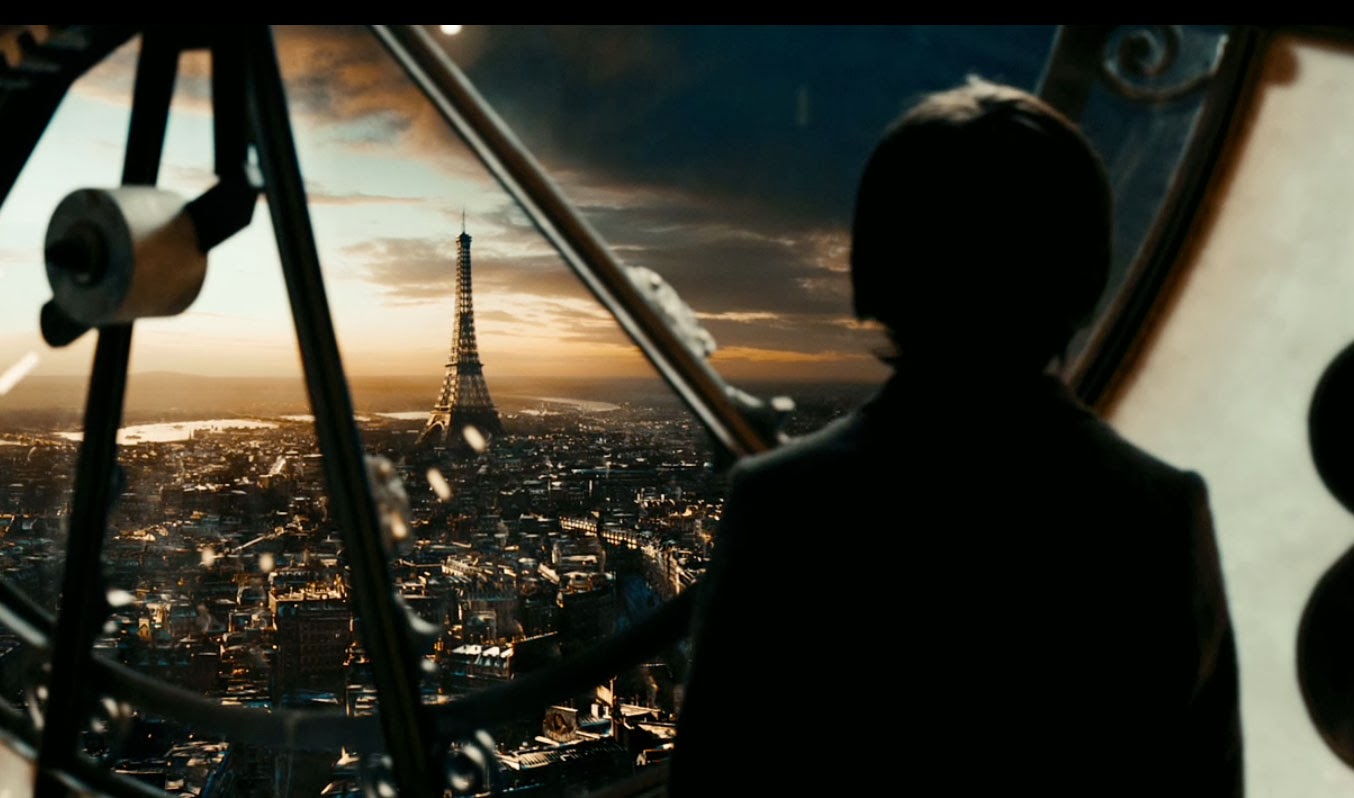
Hugo is a 2011 American fantasy adventure film directed by Martin Scorsese, starring Asa Butterfield and Chloe Grace Moretz, based on the children's book, The Invention of Hugo Cabret by Brian Selznick. Hugo is about a boy, named Hugo Cabret, who lives in the Gare Monparnasse railway station, mending and winding the station clocks, orphaned by his parents and abandoned by his uncle. Hugo attempts to repair an automaton left by his father, believing it holds a message from him, and is drawn into a world of cinema and fantasy.
Hugo is perhaps the most beautiful film to be released in recent memory, the film is like a fairy tale, fantastical and vivid, and despite containing much computer generated material, there is a concrete reality to the film. The station is a real place, where one can feel the heat of the steam and the smell of the coal, the whole thing feels tangible and tactile. Scorsese paints a vivid picture full of depth only enhanced by 3D.
Hugo is Scorsese's love letter to cinema, this film is Scorsese saying thank you to the films that inspired him, silent films feature heavily in the films plot and visuals, George Meliès is a character in this film, played by the iconic Ben Kingsley. Despite perhaps not being traditional Scorsese film, in some ways it is a deeply personal work, Scorsese bought the rights to this film after being presented with the book by his daughter, so as well as being a love letter to the world and history of cinema, Hugo is also a film he made for his daughter.
The fact that Hugo was directed, produced and projected in 3D has 2 consequences, firstly it is Scorsese showing that whatever he puts his hands on, he is successful, and the use of 3D in this film was acclaimed even by James Cameron, and is seen as being some of the best 3D cinematography of all time. It also adds a fabulous fantasy quality to the entire movie, and creates a sense of heightened reality.
This film also features some pretty fantastic direction and acting, the films leads give some of the best performances by child actors seen since Kramer Vs Kramer or Paper Moon, and particularly Asa Butterfield as Hugo has presence and subtlety, and manages to carry much of the weight of the film on his shoulders. The supporting cast is also superb, with Ben Kingsley and Christopher Lee's performances standing out. Sacha Baron Cohen also proves that he is perfectly capable of slipping seamlessly into an ensemble cast, without his performance becoming overbearing or overly comical.
Hugo is a movie about movies, a film which tells a delightfully old-fashioned traditional story in a new and innovative way, melding traditional and magical storytelling with modern techniques. If the script is, admittedly a little meandering, and perhaps a bit long for a children's movie (although admittedly restrained for a Martin Scorsese film), the emotional payoff once we reach the end truly packs a punch. Hugo is magical, enchanting and extravagant, a true love letter to the magic of the movies, and a magical movie in itself. Rating: A-

 Georges Méliès: "My friends, I address you all tonight as you truly are; wizards, mermaids, travelers, adventurers, magicians... Come and dream with me."             

Saturday, 14 December 2013

THE HOBBIT: THE DESOLATION OF SMAUG - A Review by Philip Josse

I don't know if i ever thought that i would be able to go back to middle earth, i think i assumed that our cinematic journey was over, however, Peter Jackson developed the hobbit as a 3 part movie project, using the appendicies from The Return Of The King to fill out the story. The Desolation of Smaug picks up where An Unexpected Journey left off, with the dwarves  and Bilbo, aided by Gandalf escaping the Orcs on their Wargs, and running into Beorn, a shapeshifter who takes form as a bear. The story then details their journey to the lonely mountain, and their attempt to take back the arkenstone, on the way they pass through Mirkwood, where they are attacked by spiders and orcs, trapped by elves and escape in some barrels, before entering Lake-Town, and attempting to reason with the treacherous master.
The film begins with a prologue, much like the Lord of the Rings films, and overall this film has much better pacing than the last film did, there are no silly pranks, no gags and the characters are not really introduced, i convinced myself when watching the last film that the extended introduction of the company of dwarves was needed to differenciate them, however i found when watching this film that i had forgotten the names of most of the dwarves, and that i didn't really care. The film feels action packed, and two minutes in we are already running from waargs and chasing bears. This film, for me, justifies turning this book into a trilogy, and even at two and a half hours long, it doesn't feel excessive. The action scenes are fantastic, and even though we haven't seen a real battle yet, the fight scenes between the elves and the orcs stand out, Tauriel is a fantastic addition to this story, the adds a much needed female character to the mix, and is a strong moral character, and a fantastic fighter.
The film looks absolutely fantastic, even better than the first, and the filmmakers have managed to find a way to tone down the cinematography, to stop everything looking so fake, one of the problems with the first movie is that it simply wasn't ready, and the CG characters looked like video game avatars, in this movie those characters look fantastic, tactile and ugly, with the orcs being particularly ferocious. The designs of these characters are also great, and some of the orcs even have their armor growing out of their skin like secateurs. The sets are what really stands out, the elven realm of mirkwood looks absolutely superb, it is a magnificently tall space featuring stairs and waterfalls, carved rock and huge chasms, the space is like a cathedral in it's majesty, and even though the space was certainly enhanced by CGI, the space feels real, and tactile. Lake-Town is also a masterpiece, this space was certainly a minature, as it again feels real and inhabited, the space is this trilogies Minas Tirith, a living, breathing city captured on film. The space is like a venice made entirely of wood, and it lives and breathes like a real city
Now we come to Smaug, played by Benedict Cumberbatch the character is ferocious, menacing and strangely human, the dragon has real character, and lives and breathes much in the same way that Gollum did, and visually he is an absolute delight, his scales are a burnished shade of blue, and his eyes are proud and strong, Smaug was created using motion capture, much like Gollum and is a technological marvel, much of the characters presence comes from this being a motion capture performance.
Overall i was very impressed with The Desolation of Smaug, this film alone justifies the series' expansion to three films, the movie is action packed and exciting, and is generally a fun time, the visuals are inspired and stunning, and the script is strong, the film offers deft performances from McKellen, Freeman and Armitage, Lee Pace is suitably menacing as Thranduil, and Evangeline Lilly adds a much needed female presence. The highlight of the film is undoubtedly the appearance of Smaug, and Benedict Cumberbatch is this films MVP, he no doubt deserves to be nominated for an oscar, the only shame is that he is ineligible! The Desolation Of Smaug is one hell of a fun ride. Rating: A-

Thranduil: Where does your journey end? You seek that which would bestow upon you the right to rule. A quest to reclaim a homeland, and slay a dragon!