Marvel's Jessica Jones is the second MCU property to be brought to Netflix, after Daredevil, which was released earlier this year. Jessica Jones is also noteworthy as it is the first MCU property released to have a female title character.
Krysten Ritter stars as Jessica Jones, a former superhero turned private investigator suffering from PTSD, still reeling from the aftermath of a breakup. Mike Coulter stars as Luke Cage, who will be featured in his own Netflix series early next year. Finally David Tennant stars as Redgrave, a villain with the power of mind control.
The series begins very strongly, and it gained so much momentum within the first few episodes that I wondered if it would be able to maintain this energy throughout, and I wasn't disappointed. The show is genuinely gripping from start to finish, and I watched the show at breakneck speed, to the detriment of exam revision.
The show is so much darker than previous Marvel properties, and much more violence, whereas most mainstream MCU film are targeted at a young adult or teen audience, Jessica Jones is aimed at an adult audience, and thematically it explores themes of rape, free will and sexuality.
I must admit there is something undeniably erotic about seeing two gifted humans with super strength going at it, it's something that's intrigued me for quite a while, and we finally get to see it on screen.
It seems impossible to believe that this was written by Melissa Rosenberg, who wrote all of the Twilight films, in all of their reductive post-feminist glory. More action is crammed into the first episode of Jessica Jones than into all five excruciating Twilight films.
Part of what makes this series so great is just how visceral all the action is, I've never before flinched during an MCU title, watching Iron Man attack the Hulk during Age of Ultron did nothing for me, because I knew it wasn't real. The action in Jessica Jones is scarier, because I feel every punch, every hit, because it all seems so much realer than watching computer generated characters punch each other with no gravity or weight to them.
I'm praying that we'll see a second series of Jessica Jones before The Defenders miniseries comes to Netflix, and given the buzz surrounding this series, I'm confident that we will, for me this remains one of my favorite MCU titles to date. Jessica Jones is dark, thrilling and gripping entertainment.
Showing posts with label Action. Show all posts
Saturday, 28 November 2015
Monday, 23 November 2015
Mockingjay - The Final Flight
Mockingjay - Part 2 is the final installment in the Hunger Games Saga, starring all of the same cast as previous installments, this film is the final chapter of Katniss' story, and shows her final defeat of the Capitol.
Politically the themes of this film show much more depth than previous installments, rather than the film being simply about revolution, and rebellion, this film is about the nature of good, and evil, crossing the line where the oppressed become the oppressors. Where the dictated who have risen up and overthrown their dictators become the dictators themselves.
During this film Katniss realizes that the battle between good and evil is often an internal one, she sees the rebellion growing in power and influence, and she begins to question their purpose and morals. She starts to distrust the leader of the rebellion, Alma Coin and she gradually comes to doubt the sacrifices she has made.
The film also discusses the nature of victory, the fact that nobody really 'wins' a war, all victors experience loss and pain. This is discussed throughout the series as a whole, and this theme is first explored during the first film, in which Katniss and Peeta lose so much, although they are considered 'victors'. At the end of Mockingjay, Effie Trinket encourages Katniss to 'find the life of a victor'. To finally find peace.
Unfortunately Mockingjay, which could have been a glorious finale to the Hunger Games Trilogy has been split into two films, as is often the case with these films, this has left part 1 slow and quiet and lacking any real climax, however it has made part 2 even better, the final film is now chock full of action, and the vast majority of the film shows the rebellions battle in the Capitol.
I was however impressed with Mockingjay - Part 2, the film seems well thought out and well acted, and it doesn't rob us of the opportunity to say a final farewell to the characters we've grown to love over the years, even if those goodbyes are brief. Mockingjay - Part 2 is a satisfying conclusion to what has undoubtedly been one of the greatest young adult sagas since Harry Potter.
Politically the themes of this film show much more depth than previous installments, rather than the film being simply about revolution, and rebellion, this film is about the nature of good, and evil, crossing the line where the oppressed become the oppressors. Where the dictated who have risen up and overthrown their dictators become the dictators themselves.
During this film Katniss realizes that the battle between good and evil is often an internal one, she sees the rebellion growing in power and influence, and she begins to question their purpose and morals. She starts to distrust the leader of the rebellion, Alma Coin and she gradually comes to doubt the sacrifices she has made.
The film also discusses the nature of victory, the fact that nobody really 'wins' a war, all victors experience loss and pain. This is discussed throughout the series as a whole, and this theme is first explored during the first film, in which Katniss and Peeta lose so much, although they are considered 'victors'. At the end of Mockingjay, Effie Trinket encourages Katniss to 'find the life of a victor'. To finally find peace.
Unfortunately Mockingjay, which could have been a glorious finale to the Hunger Games Trilogy has been split into two films, as is often the case with these films, this has left part 1 slow and quiet and lacking any real climax, however it has made part 2 even better, the final film is now chock full of action, and the vast majority of the film shows the rebellions battle in the Capitol.
I was however impressed with Mockingjay - Part 2, the film seems well thought out and well acted, and it doesn't rob us of the opportunity to say a final farewell to the characters we've grown to love over the years, even if those goodbyes are brief. Mockingjay - Part 2 is a satisfying conclusion to what has undoubtedly been one of the greatest young adult sagas since Harry Potter.
Wednesday, 17 June 2015
Snowpiercer
This ecological epic from south korean director Bong Joon-ho is an incredibly powerful piece of art, simultaneously an action epic and an art house indie Snowpiercer is about the last remaining survivors of planet earth who circle the globe in a perpetually travelling train after an ice age has caused the near extinction of the human race.
The film is a massive piece of social commentary, and on the train is a sturdily defined social structure much like on our planet today, at the back of the train the tail passengers live in squalid conditions, the passengers in the middle live lives of lavish decadence while in the head, Wilford, the builder of the train lives in peaceful minimalism.
The tail passengers, lead by Curtis played by Chris Evans surge towards the front of the train hoping to ignite a revolution. The whole train is a metaphor for our societies social structure, for our class system and how the status quo is necessary to keep order.
Mason, Wilford's henchwoman is a fearsome character, played by Tilda Swinton she is a thatcherian masterpiece, with a broad yorkshire accent and ever broader teeth, Swinton's performance is predictably magnificent.
The other performances of this film are also excellent, with Joon-ho directing a fine cast of thespians including Jamie Bell, Octavia Spencer, Ed Harris and John Hurt
Visually this film is a treat, with the segments of the train playing important roles, the train itself is a fully three dimensional space, holistically realized and minutely crafted it is a space the audience longs to explore, we long to walk though the orangery and marvel at the aquarium, we long to explore the nightclubs and saunas.
What is also apparent from Snowpiercer is how much of a mash up it is of multiple genres, the film is a blockbuster with an A-list cast, yet the way in which the film analyses our current social system. Snowpiercer is a shoestring indie film, with a massive budget and fantastic cast, and this film is the perfect example of how original films can survive in spite of large budgets.
I really enjoyed Snowpiercer, it's refreshing, unique and original, and it's heartening to see how original films can thrive in our adaptation laden movie release schedule.
Monday, 15 June 2015
Big Hero Six
As the first Disney Animated Adaptation of a Marvel property, Big Hero 6 has a lot to live up to, thankfully the film delivers and is a refreshingly original addition to the Disney animated canon.
Big Hero 6 is the story of Hiro, a young robotics genius who is forced to become a superhero after his invention is stolen and his brother is killed in order to save his city and avenge his brother.
Firstly the film is gorgeous, Disney developed new computers and algorithms to animate the world seen, this is apparent as the film features some of the most stunning photorealistic animation yet seen on film, even surpassing many of Pixar's best efforts, which in itself is no mean feat.
The film is based in San Franskyo, described as a mashup of San Francisco and Tokyo, which is more accurately a japanified version of The Golden Gate city. San Fransokyo is laid out entirely like San Francisco down to the placement of the painted ladies and indeed the film makers even dug through city archives to lay out the city exactly.
The result is a world so complete and holistic, so all encompassing that it looks and feels like a real place.
This film is only Disney's second attempt at a science fiction film after Meet The Robinsons, and where Robinsons, though fantastic is a film with obvious caveats, Big Hero 6 is an entirely more well formed work.
The film reinvents the original comic book characters to make them more relatable (and more easily marketable to children) the monster Baymax is now cuddly and lovable, and the weirdos who surround our main character are now a ragtag team of endearing scientists.
It should be said that unfortunately this film is not part of the marvel cinematic universe, it would have been interesting and unexpected to tie this film in with other marvel properties, so its a shame that it is instead segregated.
Overall I really liked Big Hero 6, finding it to be beautiful, thoughtful and entertaining, this is the Disney animated movie that those who typically hate Disney will love, and is amongst the best marvel superhero films.
Big Hero 6 is the story of Hiro, a young robotics genius who is forced to become a superhero after his invention is stolen and his brother is killed in order to save his city and avenge his brother.
Firstly the film is gorgeous, Disney developed new computers and algorithms to animate the world seen, this is apparent as the film features some of the most stunning photorealistic animation yet seen on film, even surpassing many of Pixar's best efforts, which in itself is no mean feat.
The film is based in San Franskyo, described as a mashup of San Francisco and Tokyo, which is more accurately a japanified version of The Golden Gate city. San Fransokyo is laid out entirely like San Francisco down to the placement of the painted ladies and indeed the film makers even dug through city archives to lay out the city exactly.
The result is a world so complete and holistic, so all encompassing that it looks and feels like a real place.
This film is only Disney's second attempt at a science fiction film after Meet The Robinsons, and where Robinsons, though fantastic is a film with obvious caveats, Big Hero 6 is an entirely more well formed work.
The film reinvents the original comic book characters to make them more relatable (and more easily marketable to children) the monster Baymax is now cuddly and lovable, and the weirdos who surround our main character are now a ragtag team of endearing scientists.
It should be said that unfortunately this film is not part of the marvel cinematic universe, it would have been interesting and unexpected to tie this film in with other marvel properties, so its a shame that it is instead segregated.
Overall I really liked Big Hero 6, finding it to be beautiful, thoughtful and entertaining, this is the Disney animated movie that those who typically hate Disney will love, and is amongst the best marvel superhero films.
Friday, 12 June 2015
Kingsman: The Secret Service
Whilst watching this film, I was amazed by how iconic the movie felt, I felt as if I was watching the start of a movie franchise which would go on to become the next great spy franchise.
The film, adapted from a popular comic book series feels like a highly modernized James Bond, a version of Bond which, although less classic and less refined, was more energetic and fresher. Kingsman is the story of Eggsy, a young chav recruited into a secret spy organisation called The Kingsmen. Upon arriving at their headquarters he is set a series of tasks to determine his worth.
What was ultimately also apparent about Kingsman was the style of the film, the fashion of the film is stylish, classic and quintessentially British, and the films producers teamed up with Mr. Porter to create a clothing line based on the film, a first for the industry.
Although the film does sometimes feel aimless, and suffers from particular drag in its third act, it is never dull, and even when I was unsure about where the film was headed, it was always entertaining.
The star of the film is relative unknown Taron Egerton, who is a welcome addition to British cinema and who is able to make the relatively emotional difficult journey from east London chav to reformed gentleman by the end of the film.
The supporting cast of the film is filled out with Colin FIrth, Mark Strong, Samuel L Jackson and Michael Caine, who all give fine, if not outstanding performances.
Even if the film feels sometimes aimless Kingsman: The Secret Service is a delightfully stylish and entertaining cinematic romp, and may well be the greatest original british spy film since Dr. No, bring on the sequel.
The film, adapted from a popular comic book series feels like a highly modernized James Bond, a version of Bond which, although less classic and less refined, was more energetic and fresher. Kingsman is the story of Eggsy, a young chav recruited into a secret spy organisation called The Kingsmen. Upon arriving at their headquarters he is set a series of tasks to determine his worth.
What was ultimately also apparent about Kingsman was the style of the film, the fashion of the film is stylish, classic and quintessentially British, and the films producers teamed up with Mr. Porter to create a clothing line based on the film, a first for the industry.
Although the film does sometimes feel aimless, and suffers from particular drag in its third act, it is never dull, and even when I was unsure about where the film was headed, it was always entertaining.
The star of the film is relative unknown Taron Egerton, who is a welcome addition to British cinema and who is able to make the relatively emotional difficult journey from east London chav to reformed gentleman by the end of the film.
The supporting cast of the film is filled out with Colin FIrth, Mark Strong, Samuel L Jackson and Michael Caine, who all give fine, if not outstanding performances.
Even if the film feels sometimes aimless Kingsman: The Secret Service is a delightfully stylish and entertaining cinematic romp, and may well be the greatest original british spy film since Dr. No, bring on the sequel.
Tuesday, 23 September 2014
Harry Potter and the Deathly Hallows : The End of Our Journey
Harry Potter and the Deathly Hallows Part 1 is the seventh part of the Harry Potter saga, and is currently the only film in this series that i haven't reviewed yet. The film is the first part of the two part finale detailing the seventh year of Harry and his friend's schooling. This is the first and only film not to feature any action at Hogwarts. The film features the wizarding world torn apart by war, its inhabitants living in fear of Voldemort and his death eaters.
The film begins with the order of the phoenix attempting to remove Harry from Privet Drive to a safe house, and features the wedding of Fleur and Bill Weasley. The remainder of the film recounts the story of Harry Ron and Hermione looking for Horcruxes, after realizing the locket they found in the previous film is a fake, they look for the real one, and upon finding it, they search for a way to destroy it, the film then shows their destruction of the locket and their search for the others, in addition to Harry finding out more about Dumbledore thanks in part to Rita Skeeter's tell all exposé.
The problem with splitting the final book into two films, is that while it pays off in the next film, creating a climax that is thrilling and frenetic, it leaves this film a little redundant, and while filling all the action into a single film would have been difficult and would have resulting in the omission of many important details, it leaves this film without much of a climax, while the skirmish at Malfoy Manor is used as the ending of the film, it fails to provide a satisfying conclusion, and is highly unsatisfactory.
Deathly Hallows was written as one novel, and there is really no suitable break point in the story without ruining the balance of the films, the final film of the series is really full with action and yet this film feels a little empty and unnecessary. The novel as it was planned by Rowling starts of slowly and builds momentum as it reaches a zenith with a satisfying climax, this film is only successful if viewed as the first part of a two part film, much in the same way as Kill Bill is, as otherwise, it is a little boring as a stand alone film. Deathly Hallows Part 1 is by far the least satisfying of the films, however it is saved somewhat by it's sequel. Rating: C+
Harry Potter is a fantastic and wonderfully complete adaptation of one of the most beloved literary series of british fiction, and so it only seems fitting to end this series of eight posts with a quite from the sorceress herself:
The film begins with the order of the phoenix attempting to remove Harry from Privet Drive to a safe house, and features the wedding of Fleur and Bill Weasley. The remainder of the film recounts the story of Harry Ron and Hermione looking for Horcruxes, after realizing the locket they found in the previous film is a fake, they look for the real one, and upon finding it, they search for a way to destroy it, the film then shows their destruction of the locket and their search for the others, in addition to Harry finding out more about Dumbledore thanks in part to Rita Skeeter's tell all exposé.
The problem with splitting the final book into two films, is that while it pays off in the next film, creating a climax that is thrilling and frenetic, it leaves this film a little redundant, and while filling all the action into a single film would have been difficult and would have resulting in the omission of many important details, it leaves this film without much of a climax, while the skirmish at Malfoy Manor is used as the ending of the film, it fails to provide a satisfying conclusion, and is highly unsatisfactory.
Deathly Hallows was written as one novel, and there is really no suitable break point in the story without ruining the balance of the films, the final film of the series is really full with action and yet this film feels a little empty and unnecessary. The novel as it was planned by Rowling starts of slowly and builds momentum as it reaches a zenith with a satisfying climax, this film is only successful if viewed as the first part of a two part film, much in the same way as Kill Bill is, as otherwise, it is a little boring as a stand alone film. Deathly Hallows Part 1 is by far the least satisfying of the films, however it is saved somewhat by it's sequel. Rating: C+
Harry Potter is a fantastic and wonderfully complete adaptation of one of the most beloved literary series of british fiction, and so it only seems fitting to end this series of eight posts with a quite from the sorceress herself:
The stories we love best do live in us forever. So, whether you come back by page or by the big screen, Hogwarts will always be there to welcome you home.- J.K. Rowling
Monday, 22 September 2014
Evolving The Batsuit
Last week i wrote an essay about the costume design of superhero films, however i barely touched on the design of the batsuit, worn by the eponymous Bruce Wayne. There have been by far more iterations of this superhero than of any other comic book character, and many different costumes, these costumes vary greatly in color, design and material.
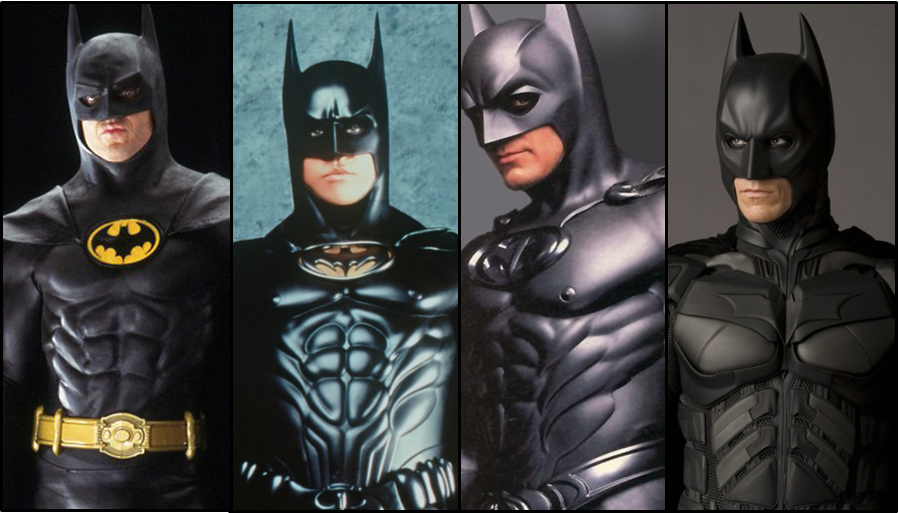
The first costume to appear on the silver screen was worn by Michael Keyton, in the Tim Burton 1989 drama and it's sequel. The costume is fairly traditional, it features the immobile cowl, thus reducing movement of the head and neck, the iconic helmet with the ears and all but the mouth covered. The suit is made of a smooth matte plastic in jet black, molded and contoured, featuring anatomic muscles and abdominals. The suit features a golden utility belt, which stands out from the rest of the suit, and a logo in fluorescent yellow. The costume is highly reminiscent of the classic comic book suit, and treads a fine line between the campiness of the television series and the tough aesthetic of later films.
The next costume was worn by Val Kilmer, this version is not dissimilar from the Michael Keyton suit, the anatomical features of the suit are now more exaggerated, Bruce Wayne now looks like he is on steroids, the suit contains defined pectorals and even the legs of the suit are muscular and overly defined. The suit contains the same cowl and helmet of the first films, but the neck of the cowl is contoured and ridged. The same utilities are present on the suit, however the belt is black, and the logo is now a bronze color. The suit is still black, however it is now shiny and reflective.
The suit worn by George Clooney would make this next film infamous, Batman & Robin was released in 1997, and would feature Clooney wearing first a suit featuring anatomically correct pectorals with nipples added, and an enlarged codpiece and buttocks, the suit also features the bat logo in silver. This suit was reviled and mocked at the time, and remains undeniably camp. The second suit Clooney wears in this film, breaks the cardinal rule of Batman wearing only black or grey. For this adventure Wayne would wear a silver suit, featuring the same unfortunate codpiece, but including silver panels on the suit, and a huge silver bat logo. This film will go down in history, for the presence of these suits alone.
The Christopher Nolan films would present a tougher, grittier and edgier aesthetic. Filmed a decade after Batman & Robin, the film uses a batsuit supposedly invented for the military, the suit is a matte black kevlar, featuring flexible panels, and a utility belt in a dark bronze, tthe batsuit is also subtly incorporated into the costume. The second suit Christian Bale would wear in this series solves the batsuit's biggest problem, it allows Batman to turn his head, the suit uses interlocking panels to make it flexible. the logo is smaller and more discreet and the neck is slim and allows Wayne to turn his head. The suit overall is tougher and more realistic.
The batsuit has gone through numerous iterations from the ludicrous to the uninspired to the realistic, the Nolan suit is realistic and by far the most removed from the source material, the most inspired and the most realistic.
The first costume to appear on the silver screen was worn by Michael Keyton, in the Tim Burton 1989 drama and it's sequel. The costume is fairly traditional, it features the immobile cowl, thus reducing movement of the head and neck, the iconic helmet with the ears and all but the mouth covered. The suit is made of a smooth matte plastic in jet black, molded and contoured, featuring anatomic muscles and abdominals. The suit features a golden utility belt, which stands out from the rest of the suit, and a logo in fluorescent yellow. The costume is highly reminiscent of the classic comic book suit, and treads a fine line between the campiness of the television series and the tough aesthetic of later films.
The next costume was worn by Val Kilmer, this version is not dissimilar from the Michael Keyton suit, the anatomical features of the suit are now more exaggerated, Bruce Wayne now looks like he is on steroids, the suit contains defined pectorals and even the legs of the suit are muscular and overly defined. The suit contains the same cowl and helmet of the first films, but the neck of the cowl is contoured and ridged. The same utilities are present on the suit, however the belt is black, and the logo is now a bronze color. The suit is still black, however it is now shiny and reflective.
The suit worn by George Clooney would make this next film infamous, Batman & Robin was released in 1997, and would feature Clooney wearing first a suit featuring anatomically correct pectorals with nipples added, and an enlarged codpiece and buttocks, the suit also features the bat logo in silver. This suit was reviled and mocked at the time, and remains undeniably camp. The second suit Clooney wears in this film, breaks the cardinal rule of Batman wearing only black or grey. For this adventure Wayne would wear a silver suit, featuring the same unfortunate codpiece, but including silver panels on the suit, and a huge silver bat logo. This film will go down in history, for the presence of these suits alone.
The Christopher Nolan films would present a tougher, grittier and edgier aesthetic. Filmed a decade after Batman & Robin, the film uses a batsuit supposedly invented for the military, the suit is a matte black kevlar, featuring flexible panels, and a utility belt in a dark bronze, tthe batsuit is also subtly incorporated into the costume. The second suit Christian Bale would wear in this series solves the batsuit's biggest problem, it allows Batman to turn his head, the suit uses interlocking panels to make it flexible. the logo is smaller and more discreet and the neck is slim and allows Wayne to turn his head. The suit overall is tougher and more realistic.
The batsuit has gone through numerous iterations from the ludicrous to the uninspired to the realistic, the Nolan suit is realistic and by far the most removed from the source material, the most inspired and the most realistic.
Wednesday, 17 September 2014
Costuming Superheroes
Comic Book adaptations are very en vogue right now. With the global success of the Marvel Cinematic Universe and the Dark Knight Trilogy, more and more characters are finally being adapted to the big screen. The first series to be adapted was the superman series in 1974 starring Christopher Reed, subsequently the Batman and X-Men series were released followed by an explosion of superhero films, seen this summer when over three superhero and comic book adaptations were released.
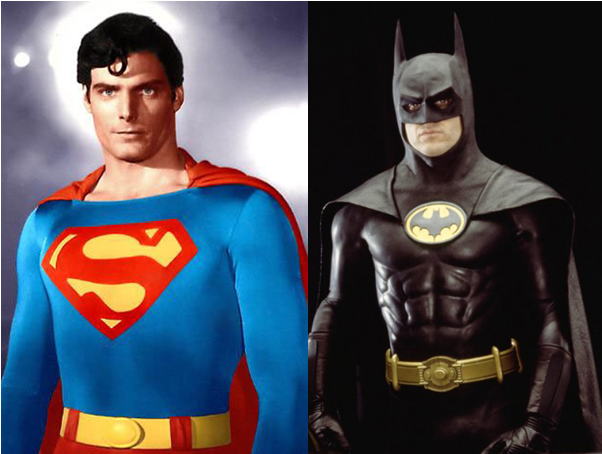
The first films adapted their comic books very literally, Christopher Reeve's Superman costume is virtually identical to the comics, and Michael Keaton's costume is highly similar to the now iconic Batman costume. Likewise the Spider-man films have followed their source material almost exactly, whereas most series, when they are rebooted, alter the costumes of the original series, in order to differentiate themselves. Spider-man didn't do this, and the costume in The Amazing Spider-man is almost identical to that of Sam Rami's original trilogy.
Other series have been less literal, the X-Man series offers one of the most radical alterations from it's source material, instead of the bright spandex costumes featured in the comics, the characters are instead outfitted in sleek leather costumes, which have much more consistency and which were more cohesive. The costumes of the comic books are brightly coloured, tight and iconic, Wolverines costume in particular is an iconic comic book image, yet even in his spin off movies, Wolverine sports his now iconic leather jacket.
Since 2006's Batman Begins, superhero costumes have taken on an even more utilitarian image, the batsuit used in this incarnation is like modern, military armor, sleek and jet black, with the batman logo noticeably disguised. After this series, costuming in superhero films became incredibly lifelike and more military inspired. Iron Man's costume is very grounded in reality and realistic, and evolves from a more amateurish armor to the sleek gold-titanium alloy seen in the later part of the film and it's sequels.
Other marvel films also take this route, Captain Americas costume is even upgraded from the spandex colors seen in the comics, to a less sleek and more realistic costume seen in the first film, and finally into the sleek kevlar inspired costume, less brightly colored than the comic book and more practical. The only exception to the mold is Thor, who retains his brightly colored red cape and slightly more ridiculous costume than the others on this list, however his costume is still slightly less ludicrous than in the comic book, the bright blue being downgraded to a subtle gray and the spandex being changed to a tough almost roman armour.
Modern superhero movies place a huge amount of importance on realism, their costumes are grounded in reality, made of tough and strong materials, and not from thin spandex or lycra. The colours of the costumes is also more subtle with bright yellows and blacks, royal blues and reds being replaced with jet black and gray and navy blues and burgandies, this gives the films a darker more sleek aesthetic which is refreshing and which is tonally more realistic.
The first films adapted their comic books very literally, Christopher Reeve's Superman costume is virtually identical to the comics, and Michael Keaton's costume is highly similar to the now iconic Batman costume. Likewise the Spider-man films have followed their source material almost exactly, whereas most series, when they are rebooted, alter the costumes of the original series, in order to differentiate themselves. Spider-man didn't do this, and the costume in The Amazing Spider-man is almost identical to that of Sam Rami's original trilogy.
Other series have been less literal, the X-Man series offers one of the most radical alterations from it's source material, instead of the bright spandex costumes featured in the comics, the characters are instead outfitted in sleek leather costumes, which have much more consistency and which were more cohesive. The costumes of the comic books are brightly coloured, tight and iconic, Wolverines costume in particular is an iconic comic book image, yet even in his spin off movies, Wolverine sports his now iconic leather jacket.
Since 2006's Batman Begins, superhero costumes have taken on an even more utilitarian image, the batsuit used in this incarnation is like modern, military armor, sleek and jet black, with the batman logo noticeably disguised. After this series, costuming in superhero films became incredibly lifelike and more military inspired. Iron Man's costume is very grounded in reality and realistic, and evolves from a more amateurish armor to the sleek gold-titanium alloy seen in the later part of the film and it's sequels.
Other marvel films also take this route, Captain Americas costume is even upgraded from the spandex colors seen in the comics, to a less sleek and more realistic costume seen in the first film, and finally into the sleek kevlar inspired costume, less brightly colored than the comic book and more practical. The only exception to the mold is Thor, who retains his brightly colored red cape and slightly more ridiculous costume than the others on this list, however his costume is still slightly less ludicrous than in the comic book, the bright blue being downgraded to a subtle gray and the spandex being changed to a tough almost roman armour.
Modern superhero movies place a huge amount of importance on realism, their costumes are grounded in reality, made of tough and strong materials, and not from thin spandex or lycra. The colours of the costumes is also more subtle with bright yellows and blacks, royal blues and reds being replaced with jet black and gray and navy blues and burgandies, this gives the films a darker more sleek aesthetic which is refreshing and which is tonally more realistic.
Tuesday, 26 August 2014
The Order of the Phoenix
Harry Potter and the Order of the Phoenix is the fifth film in the Harry Potter saga, and this film marks my renewed commitment to reviewing all the films in this series by the end of the summer, or at least before i have to go back to university in september. The Order of the Phoenix represents Harry's fifth school year at Hogwarts, and his first since the rebirth of Voldemort (sorry, spoiler) and the death of Cedric Diggory (sorry, more spoilers).
The landscape of The Order of the Phoenix is significantly darker than that of previous Potter films, the wizarding world is gripped by a possible threat from Lord Voldemort, the press is attempting to smear Harry Potter and Dumbledore at the request of the ministry and the ministry in interfering at Hogwarts, making Dolores Jane Umbridge Hogwarts high inquisitor, and later headmistress. The film introduces the Order of the Phoenix, a secret organization headquarter at 12 Grimmauld Place, Sirius' family home. The film shows the characters' evolution, and them finding their independence.
The visual landscape of the film is also darker, the film continues the trend of each film becoming lass and lass saturated, with less and less colour, showing the growing bleakness overtaking the world of the films, and the darkness that seeps into the stories. The world of Hagwarts becomes equally bleak, Harry describes him feeling alone, Dumbledore ignores him and Umbridge makes his life a misery. Starring the same cast as the other movies, this film adds Helena Bonham Carter as Bellatrix Lestrange, despite not having many lines, her presence in the film is unmatched, and her performance is note perfect. Imelda Staunton stars as Dolores Umbridge, imbuing the part with such malice and evil that she is almost, if not more hated than Voldemort. and finally Evanna Lynch plays Loona Lovegood, a kooky character that treads a fine line between endearingly queer and just plain wierd.
The film also presents several new environments, the climax of the film takes place in the department of mysteries, a series of rooms beneath the ministry of magic with an unknown purpose where prophecies are kept. The department has an unnatural blue tinge, and one of the first battles takes place in the hall of prophecy, an expansive room in which glass spheres line the walls containing prophecies which can only be taken by the keeper of the prophecy. The climactic battle takes place in the Death Chamber, a circular room featuring a stone arch in the center, at the top of a small hill is a stone archway, featuring a veil through which the dead can be heard. The environment of the department of mysteries remains elusive, and the large amount of CGI used to bring this environment to life works to it's advantage, giving the department a lack of lucidity.
The Order of the Phoenix is the most complete of the Harry Potter film yet, the tone is dark and mysterious, and the new additions to the cast are perfectly chosen, and Imelda Staunton gives a near perfect performance as Dolores Jane Umbridge. The way the cast and the tone of the series has matured is impressive, and The Order of the Phoenix is an impressive film. Rating: B+
The landscape of The Order of the Phoenix is significantly darker than that of previous Potter films, the wizarding world is gripped by a possible threat from Lord Voldemort, the press is attempting to smear Harry Potter and Dumbledore at the request of the ministry and the ministry in interfering at Hogwarts, making Dolores Jane Umbridge Hogwarts high inquisitor, and later headmistress. The film introduces the Order of the Phoenix, a secret organization headquarter at 12 Grimmauld Place, Sirius' family home. The film shows the characters' evolution, and them finding their independence.
The visual landscape of the film is also darker, the film continues the trend of each film becoming lass and lass saturated, with less and less colour, showing the growing bleakness overtaking the world of the films, and the darkness that seeps into the stories. The world of Hagwarts becomes equally bleak, Harry describes him feeling alone, Dumbledore ignores him and Umbridge makes his life a misery. Starring the same cast as the other movies, this film adds Helena Bonham Carter as Bellatrix Lestrange, despite not having many lines, her presence in the film is unmatched, and her performance is note perfect. Imelda Staunton stars as Dolores Umbridge, imbuing the part with such malice and evil that she is almost, if not more hated than Voldemort. and finally Evanna Lynch plays Loona Lovegood, a kooky character that treads a fine line between endearingly queer and just plain wierd.
The film also presents several new environments, the climax of the film takes place in the department of mysteries, a series of rooms beneath the ministry of magic with an unknown purpose where prophecies are kept. The department has an unnatural blue tinge, and one of the first battles takes place in the hall of prophecy, an expansive room in which glass spheres line the walls containing prophecies which can only be taken by the keeper of the prophecy. The climactic battle takes place in the Death Chamber, a circular room featuring a stone arch in the center, at the top of a small hill is a stone archway, featuring a veil through which the dead can be heard. The environment of the department of mysteries remains elusive, and the large amount of CGI used to bring this environment to life works to it's advantage, giving the department a lack of lucidity.
The Order of the Phoenix is the most complete of the Harry Potter film yet, the tone is dark and mysterious, and the new additions to the cast are perfectly chosen, and Imelda Staunton gives a near perfect performance as Dolores Jane Umbridge. The way the cast and the tone of the series has matured is impressive, and The Order of the Phoenix is an impressive film. Rating: B+
Lord Voldemort: You've lost, old man.
Sunday, 24 August 2014
Prizefight: MARVEL vs DC
Both these comic book companies have had huge success in the field of cinema, and both are still producing films, this post will analyze the differences between the ways these companies have adapted their universes to film, the completeness of their franchises and how coherent their film universes are.
DC have been making films for significantly longer than Marvel, DC first created a franchise with the release of the original superman film in 1978, which spawned four sequels and a semi reboot. The first batman film was released in 1989, directed by Tim Burton and starring Michael Keaton, the film became a blueprint for superhero movies released over the next decade, being dark and brooding, featuring graphic imagery and being unabashedly violent, and influencing the way superhero films were marketed and promoted. These films were both released by Warner Brothers, and to date the whole of the DC universe has been produced exclusively by Warner, giving the franchise a sense of cohesion not present in the more fragmented Marvel franchises.
Marvel Comics properties have had a significantly more tortured road to the big screen, the first movie produced was X-Men, which was released in 1999, to great critical acclaim, and which to date has spawned five sequels and two spin offs. This film was released by 20th Century Fox, as was The Fantastic Four, which itself spawned a sequel. The next property to be adapted was Spider-Man, released by Sony in 2002, spawning a trilogy of films and a rebooted franchise. In 2009 Disney purchased Marvel entertainment, and thus set up Marvel studios, which started producing it's own films financed and distributed by Disney, this gave birth to the Marvel Cinematic Universe, a shared world which some Marvel characters inhabit, notably the avengers.
Although the DC Universe may seem to be the least fragmented and the most complete, their films have all been based around only a handful of characters, and they still have not successfully created a shared universe, despite all efforts. The Marvel Cinematic Universe is the most complete shared universe ever seen on film, and Marvel remain the only studio that has managed to unite it's heroes in a single film. The universe has been hugely influential, and DC and Sony are now attempting to piece together universes, with Dawn of Justice being a clear attempt to replicate Marvels success.
The way Marvel franchises have been portrayed on film feels more complete than DC's attempts, despite the films being spread over various studios, more characters have been adapted to film, and the Marvel Cinematic Universe feels incredibly cohesive and a very impressive undertaking. Whereas the DC universe, while once great now feels tired and in need of rebuilding, and their attempts to create a shared universe between the Batman and Superman franchises feels rushed and forced.
DC have been making films for significantly longer than Marvel, DC first created a franchise with the release of the original superman film in 1978, which spawned four sequels and a semi reboot. The first batman film was released in 1989, directed by Tim Burton and starring Michael Keaton, the film became a blueprint for superhero movies released over the next decade, being dark and brooding, featuring graphic imagery and being unabashedly violent, and influencing the way superhero films were marketed and promoted. These films were both released by Warner Brothers, and to date the whole of the DC universe has been produced exclusively by Warner, giving the franchise a sense of cohesion not present in the more fragmented Marvel franchises.
Marvel Comics properties have had a significantly more tortured road to the big screen, the first movie produced was X-Men, which was released in 1999, to great critical acclaim, and which to date has spawned five sequels and two spin offs. This film was released by 20th Century Fox, as was The Fantastic Four, which itself spawned a sequel. The next property to be adapted was Spider-Man, released by Sony in 2002, spawning a trilogy of films and a rebooted franchise. In 2009 Disney purchased Marvel entertainment, and thus set up Marvel studios, which started producing it's own films financed and distributed by Disney, this gave birth to the Marvel Cinematic Universe, a shared world which some Marvel characters inhabit, notably the avengers.
Although the DC Universe may seem to be the least fragmented and the most complete, their films have all been based around only a handful of characters, and they still have not successfully created a shared universe, despite all efforts. The Marvel Cinematic Universe is the most complete shared universe ever seen on film, and Marvel remain the only studio that has managed to unite it's heroes in a single film. The universe has been hugely influential, and DC and Sony are now attempting to piece together universes, with Dawn of Justice being a clear attempt to replicate Marvels success.
The way Marvel franchises have been portrayed on film feels more complete than DC's attempts, despite the films being spread over various studios, more characters have been adapted to film, and the Marvel Cinematic Universe feels incredibly cohesive and a very impressive undertaking. Whereas the DC universe, while once great now feels tired and in need of rebuilding, and their attempts to create a shared universe between the Batman and Superman franchises feels rushed and forced.
Tuesday, 12 August 2014
Starring Scarlett Johansson
Lucy is a 2014 action film starring Scarlett Johansson and directed by Luc Besson. The film is about an american expat living in Taiwan called Lucy, she is kidnapped by drug dealers and has a bag placed in her stomach, when the bag starts leaking, Lucy is able to access more of her mind, over the 10% humans currently use (according to the film), when she is able to access other reaches of her mind she is able to do other things such as telekinesis, telepathy and the ability to change her appearance and metabolism at will.
The film's logic is not infallible, firstly the film's entire premise is based on little more than an urban myth, we now know that we use far more than 10% or our brain's capacity, and that defining it in percentage terms is illogical. Nonetheless the film takes this concept and applies it entirely literally. Secondly the film's ending, whilst poetic and beautiful, is never really explained, and the details of why Lucy's body starts to self destruct make little sense. Despite the film being slightly illogical, Lucy believes so wholeheartedly in it's concept that this matters little.
The film is enthusiastically and almost aggressively silly, currently, thanks in no small part to Christopher Nolan, modern blockbusters always take themselves far too seriously, and it is refreshingly to see a film that, if anything, doesn't take itself seriously enough, the film is content to be no more than a dumb action film, but if anything, it doesn't take itself seriously enough, this is a film that really has something to say about evolution and the future of mankind, but i am grateful that a Luc Besson film didn't try to be anything too paradigmatic.
The main character of Lucy is interesting, and hopefully the films success with Johansson above the marquee will finally convince Marvel Studios to greenlight a Scarlett Widow solo film. As lucy becomes more and more powerful, she becomes less empathetic and less human, this is perhaps intentional, but we reach a point when we can no longer view her as human, Lucy becomes almost invincible in the film's third act, and this is a problem as we the film eventually becomes less and less thrilling, because we are no longer scared about the safety of our heroine, Lucy also never interracts with her enemies, and although it is pretty cool to see Taiwanese gangsters fighting thin air, it would have been nice to have seen a true fist to fist fight scene.
Lucy is an oddly refreshing film, though it is riddled with logical gaps and pseudoscience, it is great to finally see a summer blockbuster that doesn't take itself too seriously, that powers through it's ridiculousness with fun and thrills, and which is actually rather well made, Johansson provides a suitably gonzo performance in the title role, and despite being highly silly, Lucy is actually a lot of fun, provided one doesn't attempt to take it too seriously. Rating: B-
The film's logic is not infallible, firstly the film's entire premise is based on little more than an urban myth, we now know that we use far more than 10% or our brain's capacity, and that defining it in percentage terms is illogical. Nonetheless the film takes this concept and applies it entirely literally. Secondly the film's ending, whilst poetic and beautiful, is never really explained, and the details of why Lucy's body starts to self destruct make little sense. Despite the film being slightly illogical, Lucy believes so wholeheartedly in it's concept that this matters little.
The film is enthusiastically and almost aggressively silly, currently, thanks in no small part to Christopher Nolan, modern blockbusters always take themselves far too seriously, and it is refreshingly to see a film that, if anything, doesn't take itself seriously enough, the film is content to be no more than a dumb action film, but if anything, it doesn't take itself seriously enough, this is a film that really has something to say about evolution and the future of mankind, but i am grateful that a Luc Besson film didn't try to be anything too paradigmatic.
The main character of Lucy is interesting, and hopefully the films success with Johansson above the marquee will finally convince Marvel Studios to greenlight a Scarlett Widow solo film. As lucy becomes more and more powerful, she becomes less empathetic and less human, this is perhaps intentional, but we reach a point when we can no longer view her as human, Lucy becomes almost invincible in the film's third act, and this is a problem as we the film eventually becomes less and less thrilling, because we are no longer scared about the safety of our heroine, Lucy also never interracts with her enemies, and although it is pretty cool to see Taiwanese gangsters fighting thin air, it would have been nice to have seen a true fist to fist fight scene.
Lucy is an oddly refreshing film, though it is riddled with logical gaps and pseudoscience, it is great to finally see a summer blockbuster that doesn't take itself too seriously, that powers through it's ridiculousness with fun and thrills, and which is actually rather well made, Johansson provides a suitably gonzo performance in the title role, and despite being highly silly, Lucy is actually a lot of fun, provided one doesn't attempt to take it too seriously. Rating: B-
Lucy: Life was given to us a billion years ago. Now you know what you can do with it.
Thursday, 7 August 2014
Feminism: The Discussion
The fact that this is an article that even needs to be written
saddens me greatly, but it must. Last weekend, two action films were
released, the R rater Lucy featuring the definitely female Scarlett
Johansson and the PG-13 rated Hercules, starring the definitely male
Dwayne Johnson. These are two fairly similar movies, not thematically
but in terms of marketing and quality. Both films were marketed on the
strengths of their stars, and both have similar metascores. Dwayne
Johnson is an undeniably charismatic actor, this year i proclaimed him
to be the only true action hero left, and he was the highest grossing
actor of 2013. What was surprising to industry insiders was that Lucy
won, it grossed more than Hercules despite having a female lead and
being rated R.
For years filmmakers have been reticent about making high budget films with female leads. Despite the fact that women make up 52% of the population and, like men, do go and see films, and despite the fact that men also like going to see films with female leads. The figures speak for themselves, Lucy made $44 million at the box office, and was evenly split between men and women. 2013 was also a remarkable year for women in film. For the first time since 1973, the highest grossing film at the US domestic box-office had a lead female character, the film was Catching Fire, starring Jennifer Lawrence. The highest grossing film worldwide was Frozen, an animated adaptation of The Snow Queen featuring not one but two leading female characters, and finally of the films nominated for the best picture Oscar, the highest grossing nominee was Gravity, which was not only a film with a lead female character, but a film with only a female character, in addition, the highest grossing comedy of the year was The Heat, a film, again, featuring two female leads. It seems that people don't mind seeing films starring women, who knew?
Studio executives are notorious cowards, we live in a world where there are plenty of fantastic films, but where most of them are low budget independent films, for instance of the Best Picture nominees, only gravity was a studio financed film, the others were independent's, only distributed by major studio's. The problem is that studio's will only release a film if it can be turned into a franchise, or merchandised, thus many high budget action films featuring women simply never see the light of day. The problem is that studio's, which do so much research and polling, fail to understand and struggle with change. Hollywood is a world, where when something works we just keep doing the same thing, the problem is that films with male leads make money, and so there is no impetus for studios to place women above the marquee.
The biggest problem with the film industry is that it doesn't show any sign of changing, the world is round, women make up half of the western worlds population, and like men, women also like to go and see movies. It is time for studios to wake up and realize that female driven films can be successful, that women are just as funny as men, and that men are not repulsed by the idea of going to see a film with a female lead. Films with women at the helm are some of the most successful films released today, and studio executives must start to realize that.
For years filmmakers have been reticent about making high budget films with female leads. Despite the fact that women make up 52% of the population and, like men, do go and see films, and despite the fact that men also like going to see films with female leads. The figures speak for themselves, Lucy made $44 million at the box office, and was evenly split between men and women. 2013 was also a remarkable year for women in film. For the first time since 1973, the highest grossing film at the US domestic box-office had a lead female character, the film was Catching Fire, starring Jennifer Lawrence. The highest grossing film worldwide was Frozen, an animated adaptation of The Snow Queen featuring not one but two leading female characters, and finally of the films nominated for the best picture Oscar, the highest grossing nominee was Gravity, which was not only a film with a lead female character, but a film with only a female character, in addition, the highest grossing comedy of the year was The Heat, a film, again, featuring two female leads. It seems that people don't mind seeing films starring women, who knew?
Studio executives are notorious cowards, we live in a world where there are plenty of fantastic films, but where most of them are low budget independent films, for instance of the Best Picture nominees, only gravity was a studio financed film, the others were independent's, only distributed by major studio's. The problem is that studio's will only release a film if it can be turned into a franchise, or merchandised, thus many high budget action films featuring women simply never see the light of day. The problem is that studio's, which do so much research and polling, fail to understand and struggle with change. Hollywood is a world, where when something works we just keep doing the same thing, the problem is that films with male leads make money, and so there is no impetus for studios to place women above the marquee.
The biggest problem with the film industry is that it doesn't show any sign of changing, the world is round, women make up half of the western worlds population, and like men, women also like to go and see movies. It is time for studios to wake up and realize that female driven films can be successful, that women are just as funny as men, and that men are not repulsed by the idea of going to see a film with a female lead. Films with women at the helm are some of the most successful films released today, and studio executives must start to realize that.
Tuesday, 22 July 2014
Five Favorite Cinematic Superheroes
This may come to a surprise to my readers, but i am actually a huge fan of superhero movies, these tentpole flicks have come to be the highlights of the summer movie season, and now prop up studio finances. There have been a great number of superhero movies over the years, and the pace is only increasing, with the Marvel Cinematic Universe and the new DC shared universe and spider-man properties comic book adaptations are as popular as ever. This is a list of the best super heroes to have been portrayed on film, over multiple franchises and multiple movies, sometimes by multiple actors. I will be posting my favorite actors to have incarnated these roles below!
- Iron Man portrayed by Robert Downey Jr
- Batman portrayed by Michael Keaton and Christian Bale
- Mystique portrayed by Rebecca Romijn and Jennifer Lawrence
- V portrayed by Hugo Weaving
- The Joker portrayed by Jack Nicholson and Heath Ledger
Monday, 21 July 2014
The Goblet of Fire
Harry Potter and The Goblet of Fire is the fourth film in the Harry Potter series, and was released in 2005. The film revolves around a mysterious tournament in the wizarding world in which three schools unite to take part in a tournament in order to crown a wizard with everlasting glory. Harry finds his name in the goblet, meaning that he must take part, risking his life.
The film adapts the book pretty closely, the book upon which this film is based is far more streamlined than other books in the series, there is really very little fat that needed to be trimmed and thus the film follows the book fairly closely, the only alterations that were made were the removal of Dobby, who is replaced with Neville Longbottom and the various scenes taking place in the pensive which were streamlined into one scene featuring the trial of Barty Crouch Jr. The film also features none of the game-play of the quidditch world cup leaving a slightly abrupt time jump.
Whilst the last film revolutionized the visual nature of the series, this film is by far the most interesting from a design perspective. Goblet of Fire features more original environments than perhaps any other Harry Potter film, the film starts at the quidditch world cup, opening with a huge stadium featuring almost vertical seating and tents with interiors larger than their exteriors. Afterwards the triwizard tournament features many different stadiums, from the dragon challenge with it's wood circular stadium and faux rocks, to the challenge on the black lake which features asian inspired stadiums floating on the water, and the final challenge showcasing mazes that would make Kubrick jealous.
The performances in the film are the strongest so far, the actors have settled into their roles, and the supporting cast do a fine job. This film features the corporeal return of Voldemort, and the real start of the second wizarding war, thus the film is more tonally ominous than any other of the films so far. The film features a standout performance with Miranda Richardson playing Rita Skeeter, she is catty, layered and hysterical, and it is now impossible to imagine the character any other way.
Harry Potter and the Goblet of Fire is the most mature of the films and the most action packed, visually rich and tonally dark, the film is vibrant and fun, and features fine performances from it's cast making a dark and rollicking adventure. Rating: B
The film adapts the book pretty closely, the book upon which this film is based is far more streamlined than other books in the series, there is really very little fat that needed to be trimmed and thus the film follows the book fairly closely, the only alterations that were made were the removal of Dobby, who is replaced with Neville Longbottom and the various scenes taking place in the pensive which were streamlined into one scene featuring the trial of Barty Crouch Jr. The film also features none of the game-play of the quidditch world cup leaving a slightly abrupt time jump.
Whilst the last film revolutionized the visual nature of the series, this film is by far the most interesting from a design perspective. Goblet of Fire features more original environments than perhaps any other Harry Potter film, the film starts at the quidditch world cup, opening with a huge stadium featuring almost vertical seating and tents with interiors larger than their exteriors. Afterwards the triwizard tournament features many different stadiums, from the dragon challenge with it's wood circular stadium and faux rocks, to the challenge on the black lake which features asian inspired stadiums floating on the water, and the final challenge showcasing mazes that would make Kubrick jealous.
The performances in the film are the strongest so far, the actors have settled into their roles, and the supporting cast do a fine job. This film features the corporeal return of Voldemort, and the real start of the second wizarding war, thus the film is more tonally ominous than any other of the films so far. The film features a standout performance with Miranda Richardson playing Rita Skeeter, she is catty, layered and hysterical, and it is now impossible to imagine the character any other way.
Harry Potter and the Goblet of Fire is the most mature of the films and the most action packed, visually rich and tonally dark, the film is vibrant and fun, and features fine performances from it's cast making a dark and rollicking adventure. Rating: B
Harry: I love magic.
Subscribe to:
Posts (Atom)