Showing posts with label Essay. Show all posts

Saturday, 30 July 2016

Places to visit before you die: Bilbao

This little known town on the north coast of spain's basque region is oft overshadowed by the likes of Madrid or Barcelona, but this small city, nestled between San Sebastian and Santander is truly a gem in the heart of Spain's industrial north.


Founded during the 14th century, Bilbao was the birthplace of the spanish civil war, and at its peak was one of the largest in europe, after industry fell away, Bilbao reinvented itself as a centre of culture and art, with the founding of the Guggenheim Bilbao in 1997, the town flourished, becoming an architectural jewel.


I will admit that visiting the Guggenheim was my main reason for going to Bilbao, but I fell in love with this gloriously avant-garde city and it's pleasures. The historic center of the town is known as the Casco Viejo is a beautiful labyrinth of winding pedestrianised streets filled with tapas bars and restaurants. Our base during our visit was the Plaza Nueva, a neoclassical square surrounded by colonnades which conceal a covered walkway, hiding some of the best food I'd ever eaten. Food in Spain is casual and copious, and I very happily wolfed down a thick spanish frittata served with bacon, smoked ham or vegetables, or deep fried breaded cheese served as a sandwich.


Outside of the old town the 18th century buildings fall away, to reveal newer, more daring architecture. The metro system is designed by Norman Foster, and the glittering diamond in Bilbao's crown is the Guggenheim, a towering cathedral, monumenting modern art. The building, designed by Frank Gehry is a towering edifice carved out of metal arranged as scales, limestone and finally glass. The atrium of the museum is vertiginous and bold, stretching up over three stories, like a glass chimney, crooked in perfection.


The first room is a series of sweeping metal sculptures, designed to be walked through, though they shouldn't have been, they were a supremely emotional experience, and one I shan't be forgetting in a hurry. The other rooms oscillate between Louise Bourgeois' Cells, and Shadows, by Andy Warhol, displayed here for the first time in its entirely. Outside, are pieces from Jeff Koons Celebration series, the tulips made of glass to appear as giant balloon sculptures, and Puppy, a giant floral terrier.


Between old and new is the river, the guggenheim having been built on the ashes of the old port, what was previously polluted, has now been turned into a beautiful promenade, lined with flower markets and bridges. Bilbao is almost dichotomous in its glory, a beautiful combination of old and new, of the traditional and the radically progressive.


Saturday, 12 March 2016

Coffee, my beloved

I have many, many vices, which I won't enumerate here, but one of my greatest vices is coffee. Living in England, where a good cup of coffee is about as rare as the white stag or the black rhino is a challenge, now I am generally not a food snob, I love nothing more than a pub lunch or a takeaway, but when it comes to coffee, I am a braggart, I abhor instant coffee, I'd rather just drink tea than subject myself to a mug of tasteless watery nescafe.


I also loathe instant espresso machines. Whilst placing a capsule into a machine may be incredibly convenient, this doesn't make up for it being awful for the environment, and for it lacking the refinement of using real coffee.

I do, if I'm at my parent's home in Paris, like to use whole beans, and grind them myself using a peugeot coffee grinder my mother received as a christmas present from my father a few years ago. Yes it is hard work grinding the coffee beans by hand, and it isn't something that you can do every day, but on the occasions when you have time, boy is it worth it.

For some people, coffee is just a means to a highly caffeinated end, but for me, coffee is a ritual, and thus the choice of coffee beans is also highly important, and for me the best coffee comes from guatemala. I am generally fonder of coffee from the americas than of african coffee, which tends to be rather harsh and overly bitter. Guatemalan coffee is rounder and richer than kenyan or ethiopian coffee, and the bitterness isn't overwhelming.


I also feel that what you use to make your coffee is important. A few years ago I was given an italian espresso machine, you fill the bottom with water and the middle with coffee, the water boils and the pressure pushes it up through the coffee making a delicious espresso.

If I am in search of a longer coffee then I am also partial to a cafetiere or even a drip coffee, which makes a more protracted, and a slower coffee. I also can't abide by drinking coffee out of a mug, and always use a small espresso cup.

Though it might seem like my obsession is fairly extreme, coffee is possibly one of the only things of which I actually consider myself a connoisseur. So while this article might seem rather pretentious and entirely lacking in introspection, I am well aware that I take my caffeinated vice a little too seriously.

Tuesday, 21 October 2014

The Many Faces of Edna Turnblad

I have some rather exciting personal news, i have been selected to play Edna Turnblad in the university production of Hairspray. While this news is hugely exciting, i do have some especially large shoes to fill, as this is a role that has been played by many legends, including, but not limited to, John Travolta and Harvey Fierstein.
John Travolta as Edna
The role was played by Divine in the original 1988 film directed by John Waters. The character is different from other interpretations of the role, and is, believe it or not, less camp than other iterations. Divine is a legend, and this in addition to being one of his final performances, was one of his best, and hugely influenced the other actors on this list. Divine's performance is what started the tradition of having each subsequent version of Edna played by a man in drag.

The second performer to take over the role was Harvey Fierstein, who was the original Edna on Broadway, and who won a Tony for his efforts. Vocally Fierstein is more gravelly than subsequent versions of the character, however he successfully took elements of Divines performance, especially his appearance, and then added other things, making the character more camp and lighter.
The third high profile performance, and the one most memorable to you readers was that of John Travolta in the 2007 film adaptation of the musical. Travolta's interpretation of the character was wildly different from either that came before it, and yet in a strange way it also pays homage to both the actors who came before him, the character is somehow even lighter than either Devine or Fierstein, and Edna is jolly, loving and full of life, she is somehow light, as if she imagines that she only weighs 40 kilos.
Divine as Edna
I have some pretty big shoes to fill, and each of these actors brought something different to the role of the voluptuous jolly Edna Turnblad.

Sunday, 19 October 2014

SNL has a big fat problem

In some ways, the current state of SNL is equivalent to that of the average american family, large, bloated and stationary. Back in the heyday of SNL, cast members used the show as a stepping stone to something bigger, something where they were more important, had more creative power and more freedom, however the current cast of SNL has 14 members, though this is at least down from last year's massive 18 permanent cast members, it is still more than the shows original 8 permanent cast members.
the cast of season 39
For a show which only broadcasts no more than six or seven sketches a night, 14 cast members is still too many, and it means that certain cast members are simply getting lost, and are not truly being seen or heard, it also means that the more talented cast members are not being given enough space to shine, and talented cast members like Kate McKinnon (who is arguably the best comedian of the shows current line up) are barely seen.

The other problem with the current line up is that it is weighted down with cast members who have been there for many years, and who need to leave the cast (or be fired) in order for the show to feel fresh. Keenan  Thompson, Abby Elliott and Bobby Moynihan have all been there for over five years, and have all outstayed their welcome, Thompson in particular has been there since before 2005, and in the decade since then, his popularity has waned.

Amy Poehler, Kristen Wiig, Tina Fey and Will Ferrell all left SNL before they became too stale, Fey in particular only reached iconic status after leaving the show, and impersonating Sarah Palin. They all became hugely popular and they all new when the gig was up, and it was time to move on, a cast of 11, without Elliott, Moynihan or Thompson would be more streamlined, and less bloated.
The first SNL cast
Weekend Update was one of the few things which was right about last season, and was one of my favourite parts of every episode of the last season, being sharp, current and witty. However i am sorry to say that now it is one of my least favourite elements. The show hired Cecily Strong as co-host, and she was great, however the 40th season came around and she was promptly fired, with the show being hosted by Michael Che and Colin Jost, neither of whom are particularly amusing, and the sketch now feels like a slightly pointless part of the show.

SNL is this season worse than it was last season, Kate McKinnon is now a beacon in a sea of comedians who are neither particularly talented, nor hugely likeable, and the show has become a shadow of its former self.

Monday, 22 September 2014

Evolving The Batsuit

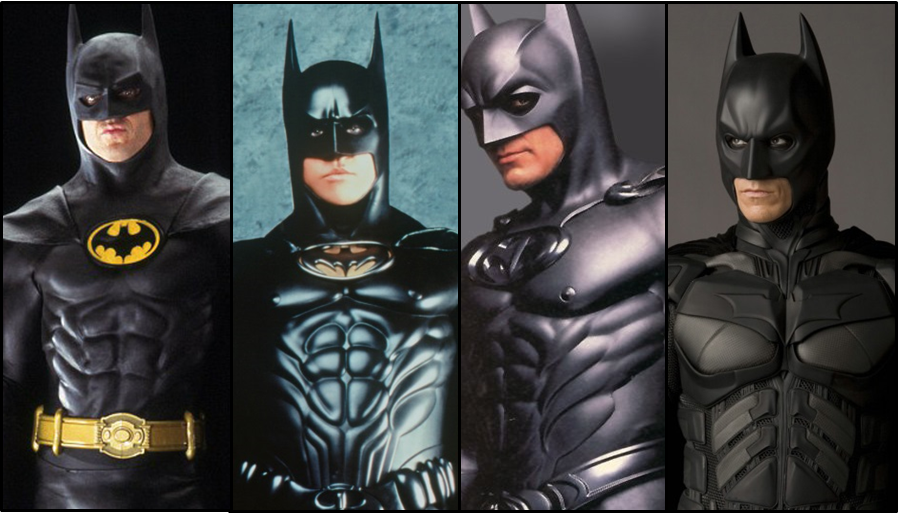
Last week i wrote an essay about the costume design of superhero films, however i barely touched on the design of the batsuit, worn by the eponymous Bruce Wayne. There have been by far more iterations of this superhero than of any other comic book character, and many different costumes, these costumes vary greatly in color, design and material.
The first costume to appear on the silver screen was worn by Michael Keyton, in the Tim Burton 1989 drama and it's sequel. The costume is fairly traditional, it features the immobile cowl, thus reducing movement of the head and neck, the iconic helmet with the ears and all but the mouth covered. The suit is made of a smooth matte plastic in jet black, molded and contoured, featuring anatomic muscles and abdominals. The suit features a golden utility belt, which stands out from the rest of the suit, and a logo in fluorescent yellow. The costume is highly reminiscent of the classic comic book suit, and treads a fine line between the campiness of the television series and the tough aesthetic of later films.
The next costume was worn by Val Kilmer, this version is not dissimilar from the Michael Keyton suit, the anatomical features of the suit are now more exaggerated, Bruce Wayne now looks like he is on steroids, the suit contains defined pectorals and even the legs of the suit are muscular and overly defined. The suit contains the same cowl and helmet of the first films, but the neck of the cowl is contoured and ridged. The same utilities are present on the suit, however the belt is black, and the logo is now a bronze color. The suit is still black, however it is now shiny and reflective.
The suit worn by George Clooney would make this next film infamous, Batman & Robin was released in 1997, and would feature Clooney wearing first a suit featuring anatomically correct pectorals with nipples added, and an enlarged codpiece and buttocks, the suit also features the bat logo in silver. This suit was reviled and mocked at the time, and remains undeniably camp. The second suit Clooney wears in this film, breaks the cardinal rule of Batman wearing only black or grey. For this adventure Wayne would wear a silver suit, featuring the same unfortunate codpiece, but including silver panels on the suit, and a huge silver bat logo. This film will go down in history, for the presence of these suits alone.
The Christopher Nolan films would present a tougher, grittier and edgier aesthetic. Filmed a decade after Batman & Robin, the film uses a batsuit supposedly invented for the military, the suit is a matte black kevlar, featuring flexible panels, and a utility belt in a dark bronze, tthe batsuit is also subtly incorporated into the costume. The second suit Christian Bale would wear in this series solves the batsuit's biggest problem, it allows Batman to turn his head, the suit uses interlocking panels to make it flexible. the logo is smaller and more discreet and the neck is slim and allows Wayne to turn his head. The suit overall is tougher and more realistic.
The batsuit has gone through numerous iterations from the ludicrous to the uninspired to the realistic, the Nolan suit is  realistic and by far the most removed from the source material, the most inspired and the most realistic.

Saturday, 20 September 2014

Designing The Great Gatsby

The Great Gatsby was one of my favorite films of last year, sumptuous design coupled with wonderful costumes and fine acting made this film gorgeous to look at, despite it's narrative flaws. The film one two Oscars, both for design, one for set design and set decorating, and the other for costume design. I have always loved the twenties, art deco and art nouveau are two of my favorite movements, and having lived in Brussels, i have seen copious amounts of both.
One of the defining features of the twenties and indeed of The Great Gatsby is the architecture, the film takes place in various mansions around long island, and the characters are defined architecturally by the houses they live in. The Buchannans live on East Egg, and belong to the old establishment. Their mansion is a large regency brick building, rectangular and strong, showing the Buchannans place as old money, and their status. Jay Gatsby, on the other hand, lives in an Art Deco mansion, featuring turrets and towers. This house is much more ostentatious than the Buchannan residence, being more ornate, showing Jay Gatsby as a climber, concerned with appearances and status. Nick, on the other hand lives in a ramshackle cottage, overrun with tumbleweed and wisteria, clearly presenting him as a lesser member of society.
The interiors of the house also contrast, the Buchannan mansion features a hollywood regency style, with white stucco ceilings and classy, understated furniture, referencing the fact that they both grew up with money. Gatsby's house on the other hand is pure art deco, wood inlay floors, tall collumns and vaulted ceilings gilded with gold, the whole effect is more overstated and ostentatious, a sign of Gatsby's new money. Nicks cottage is in complete contrast with both of these interiors, it is a more arts and crafts inspired environment, and is overall a much more personal space. The apartment occupied by Myrtle is also different, being predominantly red and stuffed with flowers, the lack of taste in the interior showing Myrtles lack of class and status, the color red being significant of her blatant femininity.
The costumes of the film are also superb, Daisy is the character most obviously categorized by her clothes, her clothes make her look feminine, girlish and naive, they show a sense of immaturity, however they nonetheless show her as someone of status, and her clothes are embellished and fashionable. Gatsby, on the other hand, shows himself to be someone, again, concerned about status, he uses a cane, despite not needing one. Tom Buchanan, on the other hand is more conservative, wearing three piece suits in wool and tweed. Gatsby always wears light colored suits, while Tom always wears dark colors, showing their contrasting personalities and conflict.
The supporting casts costumes are equally distinctive, Jordan Baker wears trousers and pant suits, elegantly tailored, and unusual for a woman of this era, her wearing of more masculine clothing shows her golfing background and her dominant attitude. Myrtle's costumes are more feminine, her wearing much of the color red, wearing her skirts short and wearing fishnet stockings. Her choice of costumes show her as a sex symbol, and as a woman who flaunts her sexuality.
The Great Gatsby is a highly elegant film, the interiors show us much about the class and tastes of the people who inhabit them, their clothes are revelatory of their personalities and status, and of their interactions with the other characters.

Wednesday, 17 September 2014

Musings On... Sofia Coppola

Sofia Coppola is one of my favorite directors, her films have a timeless elegance and a calm solemness which is beautiful and soothing. Coppola is the daughter of legendary director Francis Ford Coppola, and this is apparent in her films, Coppola spent much of her childhood growing up in hotels, and thus many of her films deal with youth and loneliness. Both Somewhere and Lost in Translation are set in hotels, and deal with the isolation and shut off reality of hotels. Coppola also grew up in a privileged environment, and her films deal with this also.
One of the main themes discussed in her films is that of isolation, The Virgin Suicides is about five sisters who are isolated from society by their mother after one of them commits suicide. The film explores the cost of their isolation, and their loneliness. Her second picture deals with the same themes, and is the story of two tourists who meet in a hotel in Tokyo, and who form an unusual bond. The milieu of the hotel is an expression of their loneliness, as it is a world cut off from reality, and both the characters are lonely and lost in their marriages. Somewhere also deals with loneliness, much in the same way as Lost in Translation.
Other themes discussed in her works are ennui, which is discussed in Marie Antoinette, Lost in Translation and Somewhere, all these films deal with characters who feel despondent and uninterested with life. Her films also deal with characters who are often wealthy and privileged, but who gain little pleasure in their lives, and who feel like their loves are worthless, Marie Antoinette deals with this especially, as Antoine is rich and lives in a palace, yet she longs for a simple life, and loathes the pretense and lavish lifestyle of Versaillles. The Bling Ring stands out among Coppola's works, and it deals with a group of young people who are obsessed with fame and fortune, who long for riches and celebrity, and who steal from those they idolize.
Coppola is a true auteur, her films are highly personal, she wrote all of them, and they are highly inspired by her own life, childhood and experiences, her films mainly deal with loneliness, isolation and solitude, her films are visually stunning and poignant and are of particular significance to me.

Costuming Superheroes

Comic Book adaptations are very en vogue right now. With the global success of the Marvel Cinematic Universe and the Dark Knight Trilogy, more and more characters are finally being adapted to the big screen. The first series to be adapted was the superman series in 1974 starring Christopher Reed, subsequently the Batman and X-Men series were released followed by an explosion of superhero films, seen this summer when over three superhero and comic book adaptations were released.
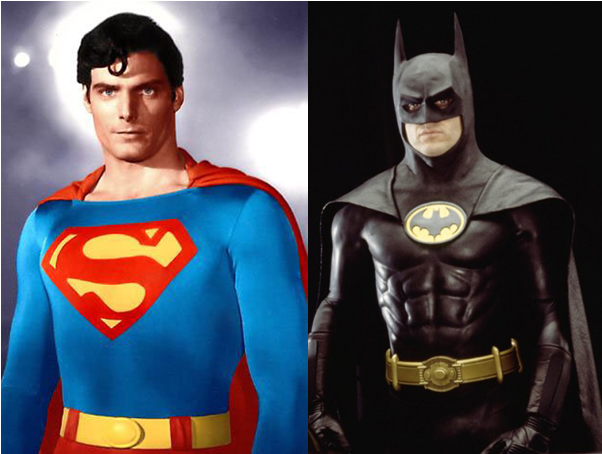
The first films adapted their comic books very literally, Christopher Reeve's Superman costume is virtually identical to the comics, and Michael Keaton's costume is highly similar to the now iconic Batman costume. Likewise the Spider-man films have followed their source material almost exactly, whereas most series, when they are rebooted, alter the costumes of the original series, in order to differentiate themselves. Spider-man didn't do this, and the costume in The Amazing Spider-man is almost identical to that of Sam Rami's original trilogy.
Other series have been less literal, the X-Man series offers one of the most radical alterations from it's source material, instead of the bright spandex costumes featured in the comics, the characters are instead outfitted in sleek leather costumes, which have much more consistency and which were more cohesive. The costumes of the comic books are brightly coloured, tight and iconic, Wolverines costume in particular is an iconic comic book image, yet even in his spin off movies, Wolverine sports his now iconic leather jacket.
Since 2006's Batman Begins, superhero costumes have taken on an even more utilitarian image, the batsuit used in this incarnation is like modern, military armor, sleek and jet black, with the batman logo noticeably disguised. After this series, costuming in superhero films became incredibly lifelike and more military inspired. Iron Man's costume is very grounded in reality and realistic, and evolves from a more amateurish armor to the sleek gold-titanium alloy seen in the later part of the film and it's sequels.
Other marvel films also take this route, Captain Americas costume is even upgraded from the spandex colors seen in the comics, to a less sleek and more realistic costume seen in the first film, and finally into the sleek kevlar inspired costume, less brightly colored than the comic book and more practical. The only exception to the mold is Thor, who retains his brightly colored red cape and slightly more ridiculous costume than the others on this list, however his costume is still slightly less ludicrous than in the comic book, the bright blue being downgraded to a subtle gray and the spandex being changed to a tough almost roman armour.
Modern superhero movies place a huge amount of importance on realism, their costumes are grounded in reality, made of tough and strong materials, and not from thin spandex or lycra. The colours of the costumes is also more subtle with bright yellows and blacks, royal blues and reds being replaced with jet black and gray and navy blues and burgandies, this gives the films a darker more sleek aesthetic which is refreshing and which is tonally more realistic.

Monday, 8 September 2014

PIXAR: The Recession

The title may seem a little sensationalist, but i promise you that this blog is not about to turn into a tabloid, i make an attempt to steer clear of gossip on this site, however it is no surprise to anyone that Pixar is a little stuck at the moment, they haven't released a film this year, only the second year since their inception that they haven't released a film.
Pixar was supposed to release a film in 2014, The Good Dinosaur, however this film was pushed back to the end of next year, after Inside out will have been released, next summer. The film has been completely restructured, and its director has been replaced. For a while Pixar looked unsinkable, they had a string of critical successes which broke abruptly with the release of Cars 2. It was a very abrupt turning point for the company, and while box office returns are still up, they haven't had an acclaimed critical hit since 2010's Toy Story 3.
In this time they have also released a prequel and a sequel, the first franchises for the company outside of the Toy Story series. The first sequel was Cars 2, a sequel to the 2006 film. The film was badly received, almost gleefully so, and ended the studios streak of critical successes. Cars itself was not a particularly well reviewed film, while it wasn't reviewed as badly as Cars 2, nonetheless it was seen to be one of the inferior Pixar films, and the move to make a sequel and to turn it into a franchise was generally seen as one influenced by the copious amounts of merchandise the film sold, which generated over a billion dollars in it's first year.
The second film, which they released a prequel to was Monsters Inc, again, whilst Monsters Inc is a charming film, it's not their greatest film, and it doesn't have the best sequel potential, and while making a sequel to Cars seemed like a good move from a financial point of view, Monsters University was a perplexing choice both commercially and financially. The film didn't generate a huge amount of interest when the first was released in 2001, and the prequel slightly underperformed at the box-office. In choosing these films to mold franchises around, Pixar made bad choices critically, neither of these films were Pixar's best, and specifically Monsters Inc didn't have a huge amount of franchise potential.
The first film that one would think of producing a sequel to would be The Incredibles, the film is a light parody of superhero films and comic book adaptations, this type of storytelling is episodic by nature, and many Hollywood franchises are now based around superheros. This film was perfect for a franchise, and disney finally announced a sequel to this film, which, in my opinion, is long overdue. The other sequel which has been announced is Finding Dory, a sequel to Finding Nemo. While Finding Nemo doesn't appear to have a huge amount of franchise potential, and while the film seems to wrap itself up pretty neatly at the end of Finding Nemo, the films breakout character was Dory, the forgetful fish played by Ellen DeGeneres, and the director has made the smart choice to base the next film around her.
This is a good choice from a narrative standpoint and commercially, the character of Dory was by far the most interesting and funny part of the original film, and it makes sense to base the film around her, it also takes into account the bankability of Ellen DeGeneres, since 2003 Ellen has become a huge star, and although her ability to become bankable at the box office has never really become tested, she has a huge fanbase, is popular with families and her talk show is the most successful daytime show in the US. The future seems brighter for Pixar, despite the impending release of Cars 3, with three original films being released, Inside Out, The Good Dinosaur and Dia De Los Muertos (based around the Day of the Dead celebrations in Mexico), and the release of two promising sequels, Pixar looks to be back on the right track, at least for now.

Prizefight: The Nanny Diaries Vs Devil Wears Prada

In the latest edition of Prizefight, i will compare The Nanny Diaries with the Devil Wears Prada, these films have quite a bit in common, they were both released around the same time, both adapted from hugely successful novels, both of which i have read, and both revolve around dealing with horrendous bosses. I will compare these films on their translation to the big screen, their casting and the hideousness of their bosses!
The novels they are based on both have their issues, that said, The Nanny Diaries is significantly more well written than The Devil Wears Prada, it is more intelligent, and has less narrative issues. The film of The Nanny Diaries follows much the same path as the novel does, the story is almost identical and the characters are much the same as they appear on the page, nothing significant is changed. The Devil Wears Prada however features significant alterations to the source material, the whole plot is reshuffled slightly to streamline it, and to make the characters more believable and empathetic. The character of Miranda is much more understandable in the film than in the novel, and in the book, she remains an out-and-out villain till the very end, in the film she eventually comes round, and we see their relationship as more of a power struggle, with both finally understanding the other. Thus The Devil Wears Prada despite requiring more effort in adapting it to the big screen, is a better adaptation, despite not being quite as faithful an adaptation.
Casting is hugely important in both of these films, the heroine of The Nanny Diaries is Annie Braddock, nicknamed Nanny, who is played by Scarlett Johansson. Johansson might seem like an odd choice for the role, and it is unusually plain for her, however she has the charisma to pull off playing such a mundane part, and she is oddly credible as a lower middle class college grad. The heroine of The Devil Wears Prada is Andy Sachs, again a college grad who goes to work for Runway, a high end fashion magazine. Again, she is well cast, although one feels that this role is a little less of a stretch for her than it is for Johansson, who is playing someone completely separate from anyone else she has ever played, and who never uses her sexuality, and, unlike Andy Sachs, who never has moments of looking pretty or attractive, in fact the whole affair is more a lesson in dowdiness, and Johansson is entirely refreshing in the role.
The bosses in the film are also impeccably cast, Laura Linney Plays Mrs X, a wealthy upper east side trophy wife, who takes little interest in raising her child, and who seems to have little worries in life. Meryl Streep plays Miranda Priestly, a thinly veiled Anna Wintour inspired magazine editor, who is fiercely professional, and who treats her assistants as disposable. Both are fantastic, and i love Laura Linneys portrayal of Mrs X, however Meryl Streep's performance is simply iconic, every note of her performance is perfect, from the cold "that's all", to the way she pats her grey hair, and her carefully pursed lips, everything is exact, and the results are stunning. As for the characters themselves, they are both fearsome creations, Mrs X is a woman who is unreasonable, cruel, has little time for her son and who wants everything from her husband. She is cold and unemotional, she treats her nannies like slaves and she expects them to do everything for her, her actions seem unrealistic, and she has no real motive, other than that being her nature. Miranda Priestly is more easy to understand, she has real motives, and she is motivated by ambition and impatience, and not by greed. Overall, Miranda Priestly is a more believable character, her motivations are more clear.
Both films are fantastic, despite not being Oscar worthy dramas they both feature great performances, and are great fun, they may not be great art but they are delightful distractions, and they do what they attempt successfully. However it is clear that The Devil Wears Prada is the superior film, well adapted and the better acted movie.

Friday, 5 September 2014

Joan Rivers: A Piece of Work

Whilst i normally reserve this work for hardcore actors and people exclusively involved with fictional television and film, however no one was more hardcore than Joan Rivers, and despite her now being known for fashion police, and her work with Johnny Carson, Joan Rivers started out as an actress, appearing in The Swimmer, Rabbit Test and even facing off against Miss Piggy in Muppets Take Manhattan.
However Joan really became an icon in the 70's with her appearances on The Tonight Show starring Jimmy Carson, becoming a regular and even standing in for Carson on many occasions, Joan was subsequently given her own show, Late Night with Joan Rivers on Fox, the show lasted only a year, lead to a rift with Carson, and was subsequently a factor in the suicide of her husband, who was the producer on the show, Rivers spoke of feeling 'raped' by fox.
Rivers next worked on her standup career, and in 1994 she was hired by E! to host the Golden Globes pre-show red carpet. Rivers became known to younger viewers for her appearances on the red carpet, sometimes working with  her daughter, Melissa. Joan originated the phrase 'who are you wearing' and became known for her dry, sharp wit, her acerbic humor and her fearlessness, Joan was a woman who was unafraid to offend or upset, and a woman who made fun of everyone, especially herself.
To younger, modern viewers, Rivers is known for her work on Fashion Police, a weekly news style show in which a panel dissect and analyze the fashion looks of the week.despite my reservations about the show itself, which i found to be judgmental and catty, the advantage of this show was that it provided Rivers visability, and it allowed her fans to see her every week, so in that respect the show was a great forum for her. Fashion Police was great viewing because it gave Rivers a platform to show off her best assets, and the entire show was infused with her personality.
In 2010, before Fashion Police became a real hit, Rivers starred in a documentary, entitled A Piece of Work, the documentary showed Joan at her best, and at her worst, it showed her as someone who could be brilliant, funny and uncensored, but also as someone who was brattish, self centered and spoilt, in short it was a true portrayal of a true woman. A part of me expects Joan to sit up and say "fooled you!", a world without Joan Rivers seems unthinkable, she was a woman who never stopped fighting, who overcame every obstacle and who never stopped or slowed down, she laughed till the end, and the world is one star dimmer now that this legend has been laid to rest. Rest in peace Joan, you were truly an icon.

“I’ve had so much plastic surgery, when I die they will donate my body to Tupperware.” - Joan Rivers

Sunday, 24 August 2014

Prizefight: MARVEL vs DC

Both these comic book companies have had huge success in the field of cinema, and both are still producing films, this post will analyze the differences between the ways these companies have adapted their universes to film, the completeness of their franchises and how coherent their film universes are.
DC have been making films for significantly longer than Marvel, DC first created a franchise with the release of the original superman film in 1978, which spawned four sequels and a semi reboot. The first batman film was released in 1989, directed by Tim Burton and starring Michael Keaton, the film became a blueprint for superhero movies released over the next decade, being dark and brooding, featuring graphic imagery and being unabashedly violent, and influencing the way superhero films were marketed and promoted. These films were both released by Warner Brothers, and to date the whole of the DC universe has been produced exclusively by Warner, giving the franchise a sense of cohesion not present in the more fragmented Marvel franchises.
Marvel Comics properties have had a significantly more tortured road to the big screen, the first movie produced was X-Men, which was released in 1999, to great critical acclaim, and which to date has spawned five sequels and two spin offs. This film was released by 20th Century Fox, as was The Fantastic Four, which itself spawned a sequel. The next property to be adapted was Spider-Man, released by Sony in 2002, spawning a trilogy of films and a rebooted franchise. In 2009 Disney purchased Marvel entertainment, and thus set up Marvel studios, which started producing it's own films financed and distributed by Disney, this gave birth to the Marvel Cinematic Universe, a shared world which some Marvel characters inhabit, notably the avengers.
Although the DC Universe may seem to be the least fragmented and the most complete, their films have all been based around only a handful of characters, and they still have not successfully created a shared universe, despite all efforts. The Marvel Cinematic Universe is the most complete shared universe ever seen on film, and Marvel remain the only studio that has managed to unite it's heroes in a single film. The universe has been hugely influential, and DC and Sony are now attempting to piece together universes, with Dawn of Justice being a clear attempt to replicate Marvels success.
The way Marvel franchises have been portrayed on film feels more complete than DC's attempts, despite the films being spread over various studios, more characters have been adapted to film, and the Marvel Cinematic Universe feels incredibly cohesive and a very impressive undertaking. Whereas the DC universe, while once great now feels tired and in need of rebuilding, and their attempts to create a shared universe between the Batman and Superman franchises feels rushed and forced.

Thursday, 21 August 2014

The Michael Bay Apology

Of all the filmmakers who are too often unfairly criticized, Michael Bay is very often the most hated on, i previously described how i try to make this blog a celebration of the cinema and a positive experience, and thus i don't review or even watch films that i know i will hate, thus there is no Teenage Mutant Ninja Turtles or Transformers 4 review, however Michael Bay holds an important place in today's film industry. Tentpole movies are a huge part of today's summer movie schedule, and studios now spend hundreds of millions of dollars on a single picture, normally a film that is certain to make money.
Many directors croak when given too much money, the production nightmares of John Carter and The Lone Ranger, both of which went hugely over budget, and both of which cost in excess of 200 million dollars to make show that although it is hard to make a film on a tight budget, it is often harder to make one with a huge budget. With Pain and Gain being a slight exception, costing only 26 million dollars, most of Bay's films cost in excess of 100 million to produce, and his films have grossed in excess of 5 billion dollars worldwide.Bay has consistantly shown that he is capable of handling huge productions, his films rarely run over budget, and they always make money.
Michael Bay's films have a target audience, mainly teenage boys, and although most film critics loathe his films, audiences love them, and his box office returns are proof of that. Although i love smaller film productions like Lost in Translation and The Hours, these are not projects that are huge runaway successes, and they don't make hundreds of millions of dollars at the box office. It is films like Transformers that are the reason these projects are green-lit in the first place, tentpole movies are named as such because that are able to prop up other, less successful films, so whilst it is great that risky films like Gravity can get made, it is only because of films like Transformers, that money is available to finance a 100 million dollar art film.
Critically i will also apologise, unlike other filmmakers, Michael Bay has his own aesthetic, he tries to make good film, and he at least shows a mere level of respect for his audience that is not seen in other filmmakers. The was a definite improvement between Transformers 2 and 3, and Pain and Gain was actually, sort of good! Despite being critically reviled, Bay has also show a level of nonchalance, and he is great at making films that appeal to his target audience, so while giant robot porn might not be to everyone's taste, Bay at least has his own aesthetic, and while his films are not to my taste, Michael Bay has at least shown himself to be a highly consistent filmmaker, critically and commercially.

"I make movies for teenage boys. Oh, dear, what a crime." - Michael Bay